
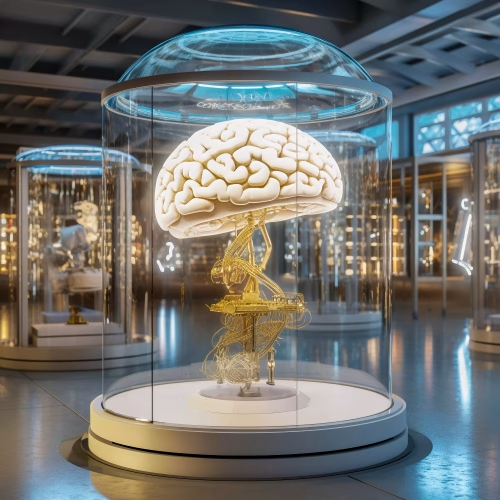
Understanding Transcranial Magnetic Stimulation: A Deep Dive into Brain Modulation
At its core, transcranial magnetic stimulation therapy is a remarkable testament to the power of physics applied to biology. It operates on the principle of electromagnetic induction, where a rapidly changing magnetic field creates an electrical current. In the context of TMS, a coil placed on the scalp generates brief, powerful magnetic pulses that painlessly pass through the skull and induce electrical currents in the underlying brain tissue. These induced currents can either excite or inhibit neuronal activity, depending on the frequency and intensity of the pulses. This precise modulation of brain activity is what makes TMS a powerful tool in neural investigations and a promising therapeutic intervention.
Unlike electroconvulsive therapy (ECT), TMS is non-invasive and does not require anesthesia or cause seizures. Patients remain awake and alert during the procedure, which typically lasts between 20 to 60 minutes. The targeted nature of TMS allows clinicians to focus on specific brain regions known to be dysfunctional in various conditions, minimizing widespread effects. This precision is a significant advantage, particularly in the delicate realm of cognitive function, where understanding and influencing specific neural circuits is paramount. The continuous refinement of laboratory instruments and protocols has made TMS increasingly accessible and effective.
Therapeutic Applications of Transcranial Magnetic Stimulation: A Spectrum of Hope
While transcranial magnetic stimulation therapy gained initial prominence for its effectiveness in treating major depressive disorder (MDD) in patients who haven't responded to antidepressant medications, its therapeutic applications have expanded significantly. The versatility of this non-invasive brain therapy continues to be explored across a wide array of neurological and psychiatric conditions, underscoring its potential to revolutionize patient care.
Depression and Anxiety Disorders
For individuals suffering from treatment-resistant depression, TMS offers a lifeline. By stimulating the left dorsolateral prefrontal cortex, an area often underactive in depression, TMS helps to rebalance neural activity. Studies have shown significant remission rates and improvements in mood. Beyond depression, preliminary research and clinical use suggest its efficacy in managing severe anxiety disorders, including generalized anxiety disorder and panic disorder, by modulating circuits implicated in emotional regulation. This area of neuroscience is rapidly advancing, offering new hope.
Obsessive-Compulsive Disorder (OCD) and PTSD
The FDA has also cleared TMS for the treatment of obsessive-compulsive disorder. For OCD, TMS targets different brain regions, such as the medial prefrontal cortex and anterior cingulate cortex, to disrupt the pathological loops characteristic of the condition. Similarly, ongoing neural investigations are exploring its role in post-traumatic stress disorder (PTSD), aiming to alleviate symptoms by targeting brain areas involved in fear processing and memory consolidation. The insights gained from cognitive understanding are crucial in identifying these target areas.
Chronic Pain and Neuropathic Conditions
Chronic pain, especially neuropathic pain, is another frontier where TMS shows promise. By modulating pain pathways in the brain, particularly in the motor cortex, TMS can offer significant relief to patients who have exhausted other treatment options. Conditions like fibromyalgia, migraine, and complex regional pain syndrome are being investigated, showcasing the broad applicability of this advanced brain technology in pain management.
Stroke Rehabilitation and Neurological Recovery
In the realm of neurological recovery, TMS is being explored as a tool to enhance motor function and speech recovery after stroke. By stimulating the motor cortex in the affected hemisphere or inhibiting the unaffected hemisphere, TMS can promote neuroplasticity, helping the brain rewire itself and regain lost functions. This application highlights the profound impact of synaptic plasticity, a core concept in neuroscience, on recovery.
The Science Behind the Stimulation: Synaptic Plasticity and Neural Networks
The long-term therapeutic effects of transcranial magnetic stimulation are attributed to its ability to induce neuroplasticity, particularly synaptic plasticity. This refers to the brain's remarkable ability to reorganize itself by forming new neural connections or strengthening existing ones. When TMS pulses repeatedly stimulate a specific brain region, they can lead to long-term potentiation (LTP) or long-term depression (LTD) of synapses, essentially strengthening or weakening the connections between neurons. This fundamental mechanism underpins learning, memory, and adaptive brain function.
Understanding these intricate neural networks is a cornerstone of modern neuroscience. Through advanced imaging techniques and sophisticated laboratory apparatus, researchers are mapping how TMS influences these networks, leading to a more profound understanding of brain disorders. This knowledge, often supported by critical research grants, is paving the way for more personalized and effective TMS protocols, tailored to individual patient needs and specific neural dysfunctions. The synergy between biotechnology and neural investigations is driving these innovations.
The Future of Neurotechnology and Brain Health
The field of neurotechnology is experiencing an unprecedented boom, with transcranial magnetic stimulation therapy at its forefront. Continuous advancements in coil design, pulse sequences, and navigation systems are making TMS treatments even more precise and efficient. Researchers are exploring novel applications, including its potential for enhancing cognitive function, treating substance use disorders, and even addressing symptoms of Parkinson's disease and Alzheimer's disease. The integration of TMS with artificial intelligence and machine learning is also on the horizon, promising even more personalized and adaptive treatment approaches.
The commitment to rigorous neural exploration, supported by substantial research funding, is vital for unlocking the full potential of TMS. Academic institutions and private companies are investing heavily in developing next-generation laboratory tools that can provide even greater insights into brain activity and offer more refined therapeutic interventions. This collaborative effort across neuroscience, biotechnology, and cognitive understanding is shaping a future where brain health is not just about managing symptoms, but about restoring and optimizing neural function.
At Deep Science Workshops and Deep Science Implementation, we are at the forefront of this revolution, offering unparalleled insights and practical training in cutting-edge neurotechnologies. Our programs are designed to equip the next generation of scientists and clinicians with the knowledge and skills necessary to advance the field of brain health and beyond. We believe that understanding the fundamental principles of neuroscience is the first step towards implementing transformative solutions.
Join Now