
The Intertwined Paths of Neuroscience and Biotechnology
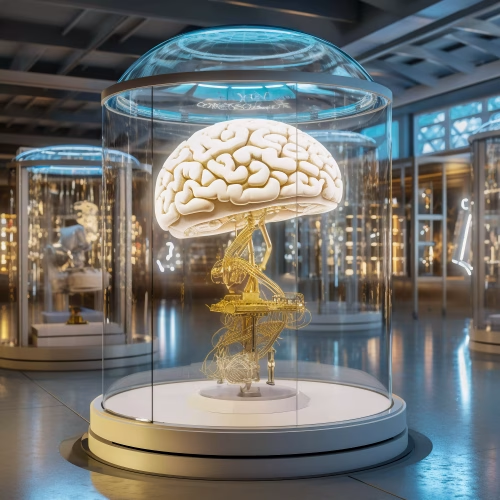
The symbiotic relationship between neuroscience and biotechnology is a cornerstone of modern scientific progress. Biotechnology furnishes the sophisticated tools and methodologies essential for advanced neural investigations, ranging from genetic sequencing to cutting-edge imaging techniques. Conversely, profound insights gleaned from brain research inspire novel biotechnological applications, such as advanced prosthetics and innovative drug delivery systems tailored for neurological conditions. This interdisciplinary collaboration is indispensable for confronting the intricate challenges posed by neurological diseases. For instance, breakthroughs in biomedical engineering are paving the way for revolutionary brain-computer interfaces, while progress in genetic research is uncovering new therapeutic avenues for inherited neurological conditions. The continuous demand for specialized lab equipment and state-of-the-art methodologies further underscores the significant financial requirements of this dynamic partnership.
Pivotal Areas of Neuroscience Research and Their Funding Imperatives
The vast landscape of neuroscience encompasses diverse research areas, each with unique funding needs:
Understanding Brain Function and Connectivity
Projects focused on mapping neural circuits and understanding brain connectivity, such as global initiatives aimed at creating comprehensive brain atlases, require substantial investment. These efforts are fundamental to deciphering the complexities of cognition, consciousness, and the origins of neurological disorders. Funding supports advanced imaging technologies, computational modeling, and large-scale data analysis.
Combating Neurodegenerative Diseases
Research into debilitating conditions like Alzheimer's, Parkinson's, and Amyotrophic Lateral Sclerosis (ALS) remains a critical priority. This area demands significant research funding for drug discovery, preclinical studies, clinical trials, and unraveling the intricate molecular mechanisms of disease progression. Innovative therapeutic approaches, including those leveraging stem cell therapy, are heavily reliant on sustained financial backing to move from laboratory to clinic.
The Rise of Computational Neuroscience and AI
The integration of artificial intelligence and machine learning is rapidly transforming brain research. This field necessitates funding for high-performance computing infrastructure, the development of sophisticated algorithms, and the training of specialized data scientists. Computational neuroscience is pivotal for building predictive models, simulating complex neural networks, and extracting meaningful insights from vast datasets.
Advancements in Neurotechnology and Brain-Computer Interfaces
This exciting and rapidly evolving domain, a prime example of applied biomedical engineering, focuses on developing devices that directly interact with the nervous system. Funding in this area supports the creation of advanced sensors, neuroprosthetics, and implantable devices designed to restore lost function or enhance neural capabilities. The development of next-generation neurotechnology holds immense promise for individuals with paralysis or sensory impairments.
Genetic Research and Gene Therapy in Neurological Contexts
Identifying genetic predispositions and developing gene-editing therapies for neurological disorders, such as Huntington's disease, epilepsy, or certain forms of autism, are high-priority research areas. This requires substantial investment for genomic sequencing, CRISPR technology development, and the rigorous clinical trials necessary to ensure safety and efficacy. The potential for personalized medicine in neurology is immense.
Navigating the Funding Landscape: Maximizing Neuroscience Research Funding Opportunities
Securing research funding is a highly competitive yet indispensable pursuit for any neuroscientist or research institution. A multitude of avenues exist, each with distinct priorities and application processes. Understanding these sources is key to successful grant acquisition.
Governmental and Public Funding Bodies
Agencies such as the National Institutes of Health (NIH) in the United States, the European Research Council (ERC), and various national science foundations globally, represent primary sources of substantial neuroscience research funding opportunities. These grants often support fundamental scientific inquiry, translational studies aimed at clinical application, and large-scale international collaborative projects. They often emphasize long-term impact and foundational knowledge generation.
Private Foundations and Non-Profit Organizations
Numerous organizations are dedicated to specific neurological diseases (e.g., Alzheimer's Association, Michael J. Fox Foundation for Parkinson's Research, National Multiple Sclerosis Society). These entities offer targeted grants, often with a strong emphasis on accelerating discoveries that directly benefit patients and foster innovative solutions. Their funding priorities are usually aligned with specific disease areas or patient advocacy.
Industry Partnerships and Venture Capital
Pharmaceutical companies, medical device manufacturers, and biotechnology firms actively invest in research that aligns with their commercial interests and product pipelines. Venture capital firms may provide significant funding to startups developing innovative neurotechnology or therapeutic solutions. These partnerships often involve a focus on translational research with clear commercialization potential.
Crowdfunding and Philanthropic Initiatives
While less traditional for large-scale projects, crowdfunding platforms and individual philanthropic donations can provide vital seed funding for pilot studies or specific aspects of research, often driven by public interest in brain research.
Crafting a Winning Grant Proposal: Keys to Success
The ability to secure research funding largely hinges on the quality and persuasiveness of your grant proposal. Key elements that resonate with funding bodies include:
- Clear and Compelling Objectives: Articulate precisely what you aim to achieve and why your research is significant for the field of neuroscience.
- Innovative and Rigorous Methodology: Detail how your approach is novel, scientifically sound, and capable of yielding robust results.
- Demonstrated Feasibility and Expertise: Showcase your team's capabilities, track record, and access to necessary resources, including specialized lab equipment.
- Articulated Broader Impact: Clearly explain the potential benefits of your research on human health, societal well-being, or advancements within biotechnology.
- Justified and Realistic Budget: Provide a transparent and well-substantiated budget that aligns with your proposed activities.
Essential Resources for Aspiring and Established Neuro-Researchers
Beyond direct financial grants, access to specialized resources is paramount for cutting-edge brain research. State-of-the-art lab equipment, ranging from advanced microscopy systems to functional MRI machines, is indispensable for conducting high-impact studies. Furthermore, continuous professional development and the acquisition of new skills are crucial in a rapidly evolving field. Programs like Deep Science Workshops and Deep Science Implementation offer specialized science courses designed to equip researchers with the latest techniques in areas such as computational synapses, advanced neuroimaging, and data analysis. These workshops are invaluable for staying at the forefront of neurotechnology and biomedical engineering, ensuring professionals are prepared for the challenges and opportunities of tomorrow.
The Future Horizon of Neuroscience: Promise and Potential
The field of neuroscience stands on the precipice of unprecedented breakthroughs. Converging advancements in artificial intelligence, gene editing technologies, and personalized medicine promise to fundamentally alter how we understand, diagnose, and treat neurological conditions. As neurotechnology evolves, so do the ethical considerations surrounding its application, necessitating thoughtful public discourse and responsible innovation. Continued, robust investment in research funding will ensure that this momentum is sustained, paving the way for a future where neurological disorders are not merely managed but potentially cured, and the full cognitive potential of the human brain is better understood. The synergistic integration of diverse disciplines, including biotechnology and biomedical engineering, will be instrumental in unlocking these transformative possibilities.
Join NowFrequently Asked Questions About Neuroscience Research and Funding
What are the primary sources of funding for neuroscience research?
Primary sources include government agencies (e.g., NIH, ERC), private foundations dedicated to specific diseases, industry partnerships, and increasingly, philanthropic initiatives and crowdfunding. Exploring diverse neuroscience research funding opportunities is crucial for sustained progress.
How does biotechnology contribute to advances in neuroscience?
Biotechnology provides essential tools and techniques for neuroscience, such as advanced imaging, genetic sequencing, and molecular biology methods. It also translates neuroscientific discoveries into practical applications like neuroprosthetics and novel therapies, bridging basic science with clinical solutions.
What role do specialized science courses play in neuroscience careers?
Specialized science courses, like those offered by Deep Science Workshops and Deep Science Implementation, are vital for equipping researchers with cutting-edge skills in areas such as computational neuroscience, neuroimaging, and advanced laboratory techniques. They ensure professionals stay updated with rapid advancements in the field.
Why is stem cell therapy a promising area in brain research?
Stem cell therapy holds immense promise for treating neurological disorders by potentially repairing damaged neural tissue, replacing lost neurons, or delivering therapeutic agents. Research in this area is focused on understanding stem cell differentiation, integration, and long-term efficacy in conditions like Parkinson's, Alzheimer's, and spinal cord injuries.
Conclusion
The pursuit of knowledge in neuroscience is a profound and indispensable endeavor, holding the potential to alleviate immense human suffering and deepen our understanding of consciousness itself. The effective exploration and utilization of neuroscience research funding opportunities are not merely about securing financial resources; they represent an investment in the future of global health, technological advancement, and human potential. By consistently supporting innovative brain research, fostering robust interdisciplinary collaboration, and ensuring access to essential resources—such as cutting-edge lab equipment and advanced science courses from reputable platforms like Deep Science Workshops—we can significantly accelerate the pace of discovery. This concerted effort will translate scientific insights into tangible benefits for society, propelling us from fundamental principles to the intricate realm of computational synapses and beyond, requiring unwavering dedication and robust financial backing.