
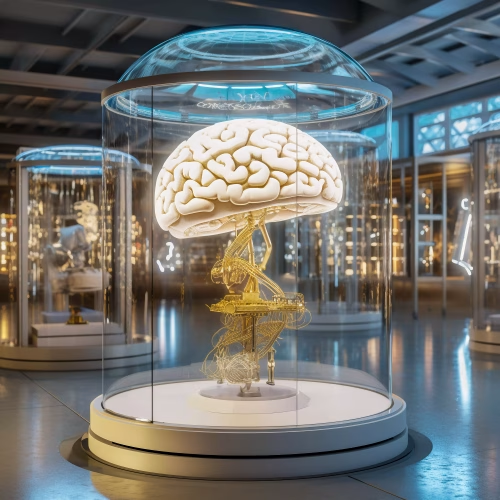
The Privacy Paradox: Your Brain Data, Your Identity
One of the most pressing ethical considerations in neuroscience research revolves around the privacy and security of neural data. As technologies like fMRI, EEG, and advanced brain-computer interfaces (BCIs) become more sophisticated, they generate vast amounts of information about an individual's thoughts, emotions, and predispositions. This data, often referred to as 'brain data,' is arguably the most intimate form of personal information. The unique patterns of a synapse firing or the overall activity of neural networks could reveal vulnerabilities, predict behaviors, or even expose private memories. The question then arises: Who owns this data? How should it be protected? And what are the implications if it falls into the wrong hands?
The potential for misuse is significant. Imagine insurance companies using brain data to assess risk, employers evaluating cognitive fitness, or governments monitoring dissent. Establishing robust legal and ethical frameworks for brain data governance is paramount. This includes strict protocols for anonymization, secure storage, and clear consent mechanisms. The field of neuroscience research must proactively address these concerns to build public trust and prevent a future where our innermost selves are vulnerable to exploitation. This is a crucial area where Deep Science Workshops can contribute by fostering discussions and training on responsible data handling in biotechnology and neurotechnology.
Informed Consent in the Age of Neurotechnology
The principle of informed consent is foundational to all medical and scientific research. However, in neuroscience, particularly with advanced neurotechnology, obtaining truly informed consent presents unique complexities. Participants in brain research might be dealing with neurological conditions that impair their cognitive abilities, making it difficult to fully comprehend the risks and benefits of an experimental procedure. Furthermore, the long-term implications of interventions like deep brain stimulation or permanent BCI implants are not always fully understood at the outset.
Consider the evolving nature of brain science itself. What is considered standard practice today might be viewed differently tomorrow. Researchers must go beyond mere legal compliance, striving for truly meaningful consent processes that are clear, comprehensive, and adaptable. This includes ongoing re-consent, especially for long-term studies or when new information about risks emerges. Ensuring that individuals fully understand the potential impact on their identity, autonomy, and privacy is a cornerstone of ethical cognitive science and neuroscience research.
Neuro-enhancement: Equity, Access, and Identity
The prospect of neuro-enhancement – using drugs, devices, or other interventions to improve cognitive functions like memory, attention, or mood – raises profound ethical questions about fairness, access, and what it means to be human. While some enhancements might offer therapeutic benefits for individuals with cognitive impairments, their widespread use by healthy individuals could lead to a 'neuro-divide,' exacerbating existing societal inequalities. Who gets access to these enhancements? Will they become a prerequisite for success in education or the workplace?
Moreover, the concept of identity itself comes into question. If our thoughts, emotions, and personality can be significantly altered by external interventions, how does this impact our sense of self? These are not just philosophical debates; they are practical challenges that neuroscience research must confront. The development of responsible guidelines for neuro-enhancement, ensuring equitable access and preventing coercive pressures, is vital. This requires a collaborative effort involving scientists, ethicists, policymakers, and the public, reflecting the interdisciplinary nature of modern biotechnology and brain research.
AI Neuroscience: The Ethical Interplay of Algorithms and the Brain
The rise of artificial intelligence (AI) has profoundly impacted neuroscience, giving birth to the field of AI neuroscience. AI algorithms are now indispensable for analyzing vast datasets from brain mapping, modeling complex neural networks, and even designing new neurotechnology. However, this powerful synergy also introduces a new layer of ethical considerations. Algorithmic bias, for instance, could lead to skewed interpretations of brain data, potentially reinforcing societal prejudices in clinical diagnoses or forensic applications.
Furthermore, as AI systems become more integrated with neurotechnology, questions arise about autonomy and control. What happens when an AI-driven BCI can influence human decision-making? Who is responsible for the actions taken? The development of ethical AI in brain research is crucial. This means ensuring transparency in AI models, establishing clear lines of accountability, and prioritizing human oversight. Organizations like Deep Science Implementation are at the forefront of ensuring that AI integration into biotechnology is done with the highest ethical standards, promoting responsible innovation in the realm of cognitive science and beyond.
Shaping the Future of Neuroscience Responsibly
The journey into the human brain is one of the most exciting scientific endeavors of our time. From understanding the intricate dance of a synapse to unraveling the mysteries of consciousness, neuroscience research promises to transform our understanding of ourselves and our world. However, with great power comes great responsibility. The ethical landscape of biotechnology and neurotechnology is complex and ever-evolving, demanding continuous vigilance and proactive engagement from all stakeholders.
To navigate this frontier responsibly, several key actions are essential. Firstly, fostering open dialogue between scientists, ethicists, policymakers, and the public is crucial. This ensures that ethical guidelines are not developed in isolation but reflect societal values. Secondly, investing in comprehensive ethics education for future neuroscientists and engineers is vital. Programs like those offered by Deep Science Workshops can play a pivotal role in instilling a strong ethical foundation in the next generation of innovators. Finally, establishing robust regulatory frameworks that are agile enough to keep pace with rapid technological advancements is necessary to safeguard individual rights and promote the equitable distribution of benefits from brain research.
By prioritizing these ethical considerations in neuroscience research, we can ensure that the incredible potential of neuroscience is harnessed for the good of all humanity, paving the way for a future where scientific discovery and ethical responsibility go hand in hand. Explore how you can be part of this responsible advancement and deepen your understanding of these critical fields.