
The intricate dance between our thoughts, emotions, and behaviors is orchestrated by the most complex organ known to humankind: the brain. For centuries, the mysteries of the mind have captivated philosophers and scientists alike. Today, thanks to groundbreaking advancements in neuroscience, we are beginning to unravel these complexities, forging a profound understanding of the relationship between brain function and mental Health. This journey of discovery, powered by relentless research and innovative biotechnology, is transforming how we perceive, diagnose, and treat mental health conditions.
From the microscopic world of the synapse to the vast networks of neural circuits, neuroscience provides the foundational knowledge necessary to address the pressing challenges of mental illness. This article delves into how this vital field is shedding light on the biological underpinnings of conditions like depression, anxiety, and schizophrenia, offering new hope for effective interventions and improved well-being. Join us as we explore the fascinating convergence of science, biology, and medicine in the quest for a healthier mind.
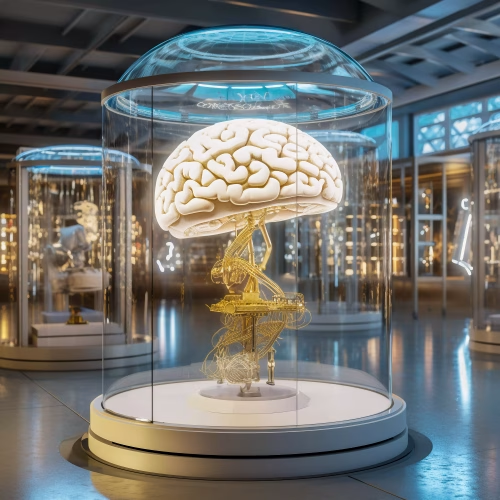
At the heart of our understanding of mental health lies the human brain – an organ of unparalleled complexity. Comprising billions of neurons, each communicating through electrochemical signals across tiny gaps called synapses, the brain forms intricate networks that govern every aspect of our existence. From basic motor functions to abstract thought, consciousness, and emotion, the seamless operation of these neural pathways is critical for cognitive and emotional well-being. Disruptions in this delicate balance, whether due to genetic predispositions, environmental factors, or injury, can manifest as various mental health disorders. Modern neuroscience endeavors to map these circuits, identify dysfunctions, and ultimately, restore optimal brain function. This fundamental understanding is the bedrock upon which all advancements in psychiatric medicine and therapy are built.
Within the brain, chemical messengers known as neurotransmitters play a pivotal role in regulating mood, sleep, appetite, and cognitive functions. Serotonin, dopamine, norepinephrine, and GABA are just a few examples of these vital compounds. Imbalances in neurotransmitter levels or their receptor activity are frequently implicated in mental health conditions. For instance, low serotonin levels are often associated with depression, while dopamine dysregulation is linked to schizophrenia and addiction. Through extensive research, neuroscience has enabled the development of psychotropic medications that target these specific chemical pathways, aiming to restore equilibrium. This pharmacological approach, a direct outcome of deep scientific understanding, has revolutionized the treatment of many psychiatric disorders, offering relief and improved quality of life for millions. The ongoing research in this area continues to uncover more nuanced interactions, leading to the development of more precise and effective treatments.
While environmental factors undeniably contribute to mental health, the role of genetics is increasingly recognized as a significant determinant. Family studies and twin studies have long indicated a hereditary component to conditions like bipolar disorder, schizophrenia, and even anxiety disorders. Advances in molecular biology and genomic sequencing have allowed neuroscience to pinpoint specific genes and genetic variations that increase susceptibility to mental illness. It's rarely a single gene, but rather a complex interplay of multiple genes, each contributing a small risk, combined with environmental stressors. This understanding is crucial for developing personalized approaches to prevention and treatment. Identifying genetic markers can help predict risk, inform early intervention strategies, and guide the selection of medications that are most likely to be effective for an individual, moving us closer to precision medicine in psychiatry. The field of neurology, particularly its intersection with genetics, holds immense promise for future breakthroughs.
The pace of discovery in neuroscience is accelerating, largely fueled by sophisticated biotechnology. Techniques such as functional magnetic resonance imaging (fMRI) allow scientists to observe brain activity in real-time, revealing which areas are engaged during specific thoughts or emotions. Optogenetics, a revolutionary technique, uses light to control genetically modified neurons, enabling precise manipulation of neural circuits to understand their function and dysfunction. CRISPR gene editing offers the potential to correct genetic mutations implicated in neurological and psychiatric disorders. These tools, products of advanced biotechnology, are transforming our ability to conduct fundamental research into the mechanisms of the brain and to develop novel therapeutic strategies. The collaborative efforts between science and engineering are pushing the boundaries of what's possible in understanding and treating the human mind.
Furthermore, the development of computational models of the brain, often referred to as computational neuroscience, is providing new avenues for understanding complex neural dynamics. These models, built on vast datasets collected through advanced imaging and electrophysiology, allow researchers to simulate brain activity and test hypotheses about disease mechanisms. This interdisciplinary approach, combining theoretical science with experimental data, is vital for unraveling the mysteries of the synapse and beyond.
The ultimate goal of neuroscience research is to translate fundamental discoveries into effective treatments for mental health conditions. This translation takes many forms. Beyond pharmacological interventions, neuromodulation techniques such as transcranial magnetic stimulation (TMS) and deep brain stimulation (DBS) are gaining traction, offering hope for individuals unresponsive to traditional therapies. These methods directly influence brain activity, demonstrating the power of targeted interventions based on a deep understanding of neurology.
Moreover, insights from neuroscience are informing and refining psychotherapeutic approaches. Understanding the brain's plasticity – its ability to change and adapt – underpins therapies like cognitive behavioral therapy (CBT), which helps individuals rewire maladaptive thought patterns. The integration of biology, science, and clinical practice is creating a more holistic and effective framework for mental healthcare. This comprehensive approach ensures that treatments are not only symptom-focused but also address the underlying neurobiological mechanisms.
The future of mental health treatment is undeniably tied to continued advancements in neuroscience. We are on the cusp of an era where personalized medicine, guided by an individual's genetic profile and unique brain characteristics, becomes the norm. Early diagnosis, facilitated by neuroimaging biomarkers and genetic screening, will allow for proactive interventions, potentially preventing the onset or progression of severe conditions. The convergence of artificial intelligence with neuroscientific data promises to unlock unprecedented insights into brain function and disease.
Educational initiatives like Deep Science Workshops and practical programs focusing on Deep Science Implementation are crucial for disseminating this knowledge and training the next generation of scientists and clinicians. These platforms provide invaluable opportunities to delve into the fundamental principles of neuroscience, from the molecular level of a synapse to complex computational models. By fostering a deeper understanding and practical application of neuroscientific principles, we can accelerate the development of innovative solutions for global mental health challenges. This commitment to advanced scientific education is paramount for driving future breakthroughs in biotechnology and neurology.
The relationship between neuroscience and mental health is a dynamic and evolving frontier. As our understanding of the brain's intricate workings deepens, propelled by relentless research and cutting-edge biotechnology, so too does our capacity to alleviate suffering and promote well-being. From deciphering the roles of neurotransmitters and genetics to harnessing advanced imaging and therapeutic techniques, science is providing unprecedented insights into the human mind. The journey is ongoing, but with each discovery, we move closer to a future where mental health conditions are understood, treated, and even prevented with greater precision and efficacy. The commitment to continuous learning and practical application, as championed by initiatives like Deep Science Workshops, will undoubtedly shape this promising future in medicine and biology.