
Unraveling the Brain's Emotional Tapestry: A Deep Dive into the Neuroscience of Emotion with Deep Science Workshops
Emotions are the vibrant colors that paint the canvas of human experience, driving our decisions, shaping our relationships, and defining our very existence. But what truly happens within the intricate labyrinth of our brains when we feel joy, fear, anger, or love? The fascinating field of the neuroscience of emotion seeks to answer these profound questions, bridging the gap between subjective experience and objective biological processes. At Deep Science Workshops, we invite you to embark on an illuminating journey from fundamental principles to computational synapses, exploring the biological underpinnings of our emotional lives. This article delves into the core concepts, cutting-edge research, and revolutionary advancements in understanding how our brains generate and process emotions, highlighting the pivotal role of modern biotechnology and computational approaches.
The Intricate Neural Architecture of Emotion
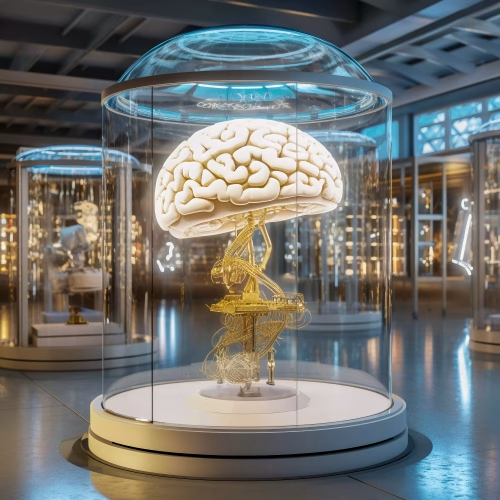
At the heart of every feeling lies a complex interplay of neural circuits. The study of emotion in the brain has meticulously mapped key regions that orchestrate our affective states. The amygdala, a small almond-shaped structure deep within the temporal lobe, is a primary player, particularly in processing fear and other strong emotions. Its rapid response system allows us to react instantly to perceived threats. However, emotions are not isolated to one area. The prefrontal cortex, the brain's executive control center, plays a crucial role in regulating emotional responses, helping us to interpret contexts and make reasoned decisions rather than purely reactive ones. Damage to this area can lead to profound changes in emotional behavior.
Beyond these, the hippocampus integrates emotional experiences with memory, providing context to our feelings. The insula, often called the "feeling" part of the brain, processes visceral sensations and bodily states, contributing to our subjective awareness of emotions like disgust or empathy. Neurotransmitters, the brain's chemical messengers, also profoundly influence our emotional landscape. Dopamine, associated with reward and motivation, drives feelings of pleasure and anticipation. Serotonin regulates mood, sleep, and appetite, with imbalances often linked to depression and anxiety. Norepinephrine, involved in arousal and alertness, contributes to our fight-or-flight responses. Understanding these fundamental aspects of biology and molecular biology is crucial to grasping the complexity of human emotion.
From Genes to Feelings: The Genetic Blueprint of Emotion
While environmental factors and personal experiences undeniably shape our emotional responses, emerging research in genetics reveals a significant biological predisposition to certain emotional traits and vulnerabilities. Genetic variations can influence the production, transport, and reception of neurotransmitters, as well as the development and connectivity of neural circuits involved in emotion. For instance, specific genetic markers have been linked to variations in anxiety levels, resilience to stress, or even empathy. This field of study, often intertwined with bioinformatics to analyze vast genomic datasets, helps explain why individuals might react differently to similar emotional stimuli. It underscores the intricate dance between our inherited biological makeup and the environment in shaping our emotional tapestry. The ongoing advancements in science continue to unravel these complex genetic influences, offering new avenues for understanding and potentially addressing emotional dysregulation.
Cutting-Edge Research Techniques: Peering into the Emotional Brain
Modern neuroscience relies on an arsenal of sophisticated tools to explore the brain's emotional activity. Functional Magnetic Resonance Imaging (fMRI) allows scientists to observe real-time brain activity by detecting changes in blood flow, revealing which areas are active during specific emotional tasks. Electroencephalography (EEG) measures electrical activity in the brain, providing insights into the speed of emotional processing. Beyond imaging, revolutionary biotechnology techniques like optogenetics and chemogenetics enable researchers to precisely control the activity of specific neurons using light or designer drugs, offering unprecedented opportunities to dissect the neural circuits of emotion in animal models. These powerful tools are transforming our understanding of everything from basic emotional responses to complex social behaviors, paving the way for targeted interventions. The continuous evolution of these methods is a testament to the dynamic nature of scientific inquiry in this domain.
Computational Neuroscience: Modeling the Mind's Emotions
The sheer complexity of the brain's emotional networks necessitates advanced analytical approaches. This is where computational neuroscience and bioinformatics come into play. Researchers are developing intricate computational models and algorithms to simulate neural networks involved in emotional processing. These models, often drawing on principles of artificial intelligence, can help predict how different inputs might lead to specific emotional outputs, or how disruptions in certain neural pathways might contribute to emotional disorders. The concept of "computational synapses" is central here, where the intricate dynamics of individual synaptic connections and their collective behavior are modeled to understand emergent emotional properties.
Furthermore, biomedical engineering is at the forefront of developing brain-computer interfaces (BCIs) that can not only read brain signals but also potentially modulate emotional states. Imagine a future where personalized devices could help individuals regulate anxiety or enhance positive emotions by directly interacting with neural circuits. This interdisciplinary approach, a hallmark of Deep Science Implementation, promises to unlock new frontiers in understanding, diagnosing, and treating emotional dysregulation, merging the realms of biology, science, and advanced computing.
The Interdisciplinary Quest for Emotional Understanding
Understanding the neuroscience of emotion is not a solitary endeavor; it is a grand collaborative quest that transcends traditional disciplinary boundaries. It requires the expertise of neuroscientists, psychologists, computer scientists, geneticists, and specialists in biotechnology and biomedical engineering. This holistic approach allows for a comprehensive understanding, from the microscopic level of molecular biology and cell biology to the macroscopic level of complex behaviors and societal interactions. Every piece of the puzzle, whether it comes from fundamental research or applied science, contributes to a richer, more nuanced picture of how our emotions work and how they impact our lives. This integrated perspective is what drives innovation and discovery in the field.
Real-World Applications and Future Implications
The insights gained from the neuroscience of emotion have profound real-world implications. In mental health, this understanding is crucial for developing more effective treatments for conditions like depression, anxiety disorders, PTSD, and bipolar disorder. By identifying specific neural targets and pathways, new pharmacological and therapeutic interventions can be designed. For neurological disorders such as Parkinson's or Alzheimer's, emotional dysregulation is a common symptom, and understanding its neural basis can lead to better patient care.
Beyond clinical applications, the principles of emotional neuroscience are influencing fields like artificial intelligence, leading to the development of emotionally intelligent AI systems. In education, understanding how emotions impact learning can lead to more effective pedagogical strategies. The continuous advancements, fueled by cutting-edge research and innovative biotechnology, promise a future where we can not only better understand our emotions but also harness this knowledge for improved well-being and a more empathetic society.
Elevate Your Understanding with Deep Science Workshops
The journey into the neuroscience of emotion is both intellectually stimulating and deeply personal. If you are passionate about unraveling the brain's mysteries and contributing to the next wave of scientific discovery, Deep Science Workshops offers unparalleled opportunities. Our comprehensive programs, designed for aspiring scientists, researchers, and enthusiasts alike, cover everything from the fundamental principles of neuroscience and biology to advanced topics in biotechnology, genetics, molecular biology, cell biology, biomedical engineering, and bioinformatics.
Through hands-on learning, expert-led sessions, and exposure to cutting-edge research, you will gain the knowledge and skills necessary to navigate this rapidly evolving field. Whether your interest lies in understanding the neural basis of fear, developing computational models of emotional intelligence, or exploring biotechnological interventions for mood disorders, our workshops provide the foundation for your success. Join a community dedicated to pushing the boundaries of science and making a tangible impact on human health and understanding.
Ready to delve deeper into the fascinating world of the neuroscience of emotion and unlock its secrets? Join our specialized programs at Deep Science Workshops and gain unparalleled insights from leading experts.
Join NowFrequently Asked Questions about the Neuroscience of Emotion
What is the neuroscience of emotion?
The neuroscience of emotion is an interdisciplinary field that investigates the neural mechanisms underlying emotional experiences. It explores how various brain structures, neurotransmitters, and neural circuits interact to produce and regulate feelings like joy, fear, anger, and sadness. This field integrates insights from biology, psychology, and advanced imaging techniques to map the brain's emotional landscape.
How do different brain regions contribute to emotional responses?
Several brain regions play crucial roles in emotional processing. The amygdala is central to fear and threat detection, while the prefrontal cortex is involved in regulating emotions and decision-making. The hippocampus links emotions to memories and context, and the insula processes visceral sensations associated with emotions. These areas work in complex networks, influenced by neurotransmitters, to generate a comprehensive emotional response. Understanding these interactions is a key area of research in neuroscience.
Can emotions be studied using computational methods?
Absolutely. Computational neuroscience and bioinformatics are increasingly vital in studying emotions. Researchers use complex algorithms and models to simulate neural networks, analyze large datasets of brain activity, and even predict emotional states. This approach, often supported by advancements in biomedical engineering, allows for a deeper, quantitative understanding of emotional processes, moving towards the concept of "computational synapses" where individual neural connections are modeled to understand emergent emotional behaviors.
What role does biotechnology play in understanding emotions?
Biotechnology is at the forefront of advancing our understanding of emotions. It provides innovative tools and techniques such as optogenetics, chemogenetics, and advanced neuroimaging (like fMRI and PET scans) that allow scientists to precisely manipulate and observe neural activity in real-time. Furthermore, biotechnological advancements contribute to the development of new therapeutic approaches for emotional disorders, from novel drug targets to gene therapies, significantly impacting mental health research.
How can I learn more about the neuroscience of emotion?
To deepen your knowledge in this captivating field, consider exploring specialized educational programs and workshops. Deep Science Workshops offers comprehensive courses that cover fundamental principles of neuroscience, delve into the intricacies of emotional processing, and introduce cutting-edge computational and biotechnological approaches. These programs are designed for anyone passionate about science, biology, and understanding the complex interplay between the brain and emotions.