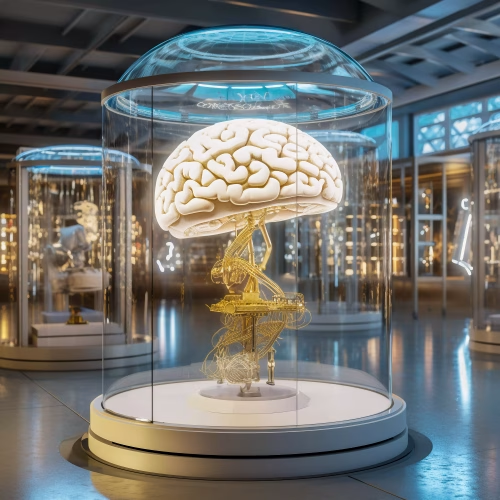
The Neural Basis of Learning: Synaptic Plasticity
At the heart of all learning lies the intricate dance of neurons, the fundamental building blocks of our brain. These specialized cells communicate with each other across tiny gaps called synapses. The magic of learning, at a cellular level, is largely attributed to a phenomenon known as synaptic plasticity – the ability of synapses to strengthen or weaken over time in response to activity. When we learn something new, specific neural pathways are activated repeatedly, leading to a phenomenon called Long-Term Potentiation (LTP). LTP strengthens the connections between neurons, making it easier for signals to pass through them in the future. Conversely, Long-Term Depression (LTD) weakens connections, helping the brain to prune unnecessary information and refine its networks. This dynamic process of synaptic modification is the very foundation upon which our memories are built and our skills are honed. Understanding these mechanisms is crucial for anyone involved in research or science aimed at enhancing cognitive function.
The field of neuroscience has made tremendous strides in elucidating these mechanisms. Advanced imaging techniques and molecular biology tools allow researchers in labs to observe these changes in real-time. The interplay of various proteins and genetic expressions dictates how efficiently these synaptic changes occur. This is where genetics plays a significant role, influencing an individual's predisposition to certain learning styles or even cognitive disorders. Future advancements in biotechnology promise even deeper insights into these molecular processes, potentially leading to novel interventions for learning disabilities or neurodegenerative diseases.
Memory Formation: Encoding, Storage, and Retrieval
Learning is inextricably linked with memory. Without the ability to store and recall information, true learning cannot occur. Memory formation is typically divided into three stages: encoding, storage, and retrieval. Encoding is the initial process of converting sensory information into a form that can be stored in the brain. This can involve different types of encoding, such as visual, acoustic, or semantic. Once encoded, information is stored, first in short-term memory (which has a limited capacity and duration) and then, if deemed important, transferred to long-term memory. Long-term memory is vast and can be further categorized into explicit (conscious recall of facts and events) and implicit (unconscious skills and habits) memories.
Retrieval is the process of accessing stored information. The efficiency of retrieval depends on how well the information was encoded and consolidated. The hippocampus, a small, seahorse-shaped structure deep within the brain, plays a critical role in the formation of new explicit memories. Damage to this area can severely impair the ability to form new memories, as seen in certain neurological conditions. The prefrontal cortex is involved in working memory and executive functions, crucial for manipulating information during active learning. Understanding these neural circuits is a cornerstone of cognitive neuroscience and informs strategies for effective study and memory retention. Research in this area often involves sophisticated experiments conducted in specialized labs, pushing the boundaries of what we know about the human mind.
The Role of Neurotransmitters and Brain Regions
The intricate symphony of the brain is conducted by various neurotransmitters, chemical messengers that transmit signals between neurons. Key neurotransmitters involved in learning and memory include acetylcholine, dopamine, serotonin, and glutamate. Acetylcholine is crucial for attention, memory, and arousal. Dopamine is associated with reward and motivation, playing a significant role in reinforcing behaviors and making learning enjoyable. Serotonin influences mood, sleep, and appetite, all of which indirectly impact cognitive function. Glutamate is the primary excitatory neurotransmitter in the brain and is vital for synaptic plasticity, making it central to the very mechanism of learning.
Beyond individual neurotransmitters, specific brain regions work in concert to facilitate learning. The amygdala is involved in emotional memory, explaining why emotionally charged events are often remembered vividly. The cerebellum is vital for motor learning and procedural memory, allowing us to learn skills like riding a bike or playing an instrument. The basal ganglia are also critical for habit formation and skill acquisition. Advances in neuroscience research, often leveraging techniques from biotechnology, allow scientists to map these neural circuits with increasing precision. This detailed understanding is invaluable for developing targeted interventions in pharma labs for conditions affecting learning and memory.
Learning Across the Lifespan: Neuroplasticity in Action
For a long time, it was believed that the adult brain was largely static, with little capacity for significant change. However, modern neuroscience has debunked this myth, revealing the remarkable phenomenon of neuroplasticity – the brain's ability to reorganize itself by forming new neural connections throughout life. This means that learning is not confined to childhood or adolescence; adults can continue to learn new skills, adapt to new environments, and even recover from brain injuries by rerouting neural pathways. Neuroplasticity is the biological basis for rehabilitation therapies and lifelong learning.
Factors influencing neuroplasticity include experience, environment, and even diet. Engaging in novel and challenging activities, maintaining a physically active lifestyle, and fostering strong social connections all contribute to a more plastic and resilient brain. The study of neuroplasticity is a vibrant area of research, with implications for education, cognitive training, and the treatment of neurological disorders. Deep Science Workshops explore these cutting-edge topics, providing participants with a comprehensive understanding of how the brain adapts and evolves. This area of science is continuously evolving, with new discoveries emerging from labs worldwide.
Enhancing Learning: Insights from Neuroscience
Understanding the neuroscience of learning provides powerful insights into how we can optimize our educational practices and personal cognitive development. Active learning strategies, which engage multiple brain regions and encourage deeper processing, are far more effective than passive reception of information. Techniques like spaced repetition, interleaving, and retrieval practice are directly supported by neuroscientific principles of memory consolidation and retrieval. Furthermore, the importance of sleep for memory consolidation cannot be overstated; during sleep, the brain actively processes and solidifies newly acquired information.
Stress and nutrition also play critical roles. Chronic stress can impair cognitive function and hinder learning by affecting structures like the hippocampus. A balanced diet, rich in essential nutrients, provides the necessary building blocks for healthy brain function. These practical applications of science are not just theoretical; they are actionable strategies that can be implemented in educational settings, workplaces, and daily life to foster more effective and enjoyable learning experiences. Deep Science Implementation focuses on translating these scientific principles into practical, impactful solutions for individuals and organizations.
The Future of Learning: Biotechnology and Computational Synapses
The intersection of neuroscience, biotechnology, and computational models is paving the way for revolutionary advancements in our understanding and enhancement of learning. From brain-computer interfaces (BCIs) that allow direct communication between the brain and external devices, to neurofeedback systems that train individuals to self-regulate brain activity, the possibilities are immense. Genetic engineering and gene therapy, informed by our understanding of genetics and neural development, hold promise for treating learning disabilities and neurodevelopmental disorders at their root.
Computational neuroscience is another rapidly expanding field, using mathematical models and simulations to understand how complex neural networks give rise to cognitive functions. This involves creating "computational synapses" – virtual models that mimic the behavior of biological synapses, allowing researchers to test hypotheses and explore scenarios that would be impossible in a wet lab. The insights gained from these simulations can inform the development of AI and machine learning algorithms that mimic human-like learning, as well as guide the design of new drugs in pharma labs aimed at enhancing cognitive function. Deep Science Workshops offer specialized modules that delve into these cutting-edge areas, preparing participants for the future of scientific innovation.
Deep Science Workshops: Your Gateway to Neuroscience Excellence
For those passionate about delving deeper into the intricate world of the brain and the mechanisms of learning, Deep Science Workshops offer unparalleled opportunities. Our comprehensive programs are designed to provide participants with a robust foundation in fundamental neuroscience principles, from cellular biology to complex cognitive functions. Whether you are a student, a researcher, or a professional looking to expand your knowledge in biotechnology, our workshops provide hands-on experience and theoretical insights that are crucial for success in modern science.
Our curriculum covers topics ranging from neural anatomy and physiology to advanced techniques in neuroimaging and computational neuroscience. We bring together experts from leading labs and institutions, ensuring that our participants receive the most current and relevant information. With a strong emphasis on practical application and critical thinking, Deep Science Workshops empower you to not just understand the science, but to apply it. Join us to explore the frontiers of genetics, the latest in pharma developments affecting the brain, and the exciting possibilities of Deep Science Implementation in real-world scenarios.
Conclusion: The Ever-Evolving Brain
The neuroscience of learning is a dynamic and rapidly evolving field that continues to reveal the astonishing complexity and adaptability of the human brain. From the microscopic changes at the synapse to the macroscopic reorganization of neural networks, every aspect of our cognitive abilities is underpinned by intricate biological processes. By understanding these mechanisms, we gain not only a deeper appreciation for our own minds but also the tools to enhance learning, develop effective educational strategies, and innovate in areas like biotechnology and pharma.
The journey into the brain is an ongoing one, fueled by relentless research and the dedication of scientists in labs worldwide. As we continue to unravel the secrets of neurons and genetics, the potential for improving human cognition and well-being is limitless. Embrace the power of scientific inquiry and join us at Deep Science Workshops to be part of this exciting frontier. Your future in science starts here.
Frequently Asked Questions about Neuroscience and Learning
What is synaptic plasticity and why is it important for learning?
Synaptic plasticity refers to the ability of synapses, the connections between neurons, to strengthen or weaken over time. It is crucial for learning because it allows the brain to adapt and store new information. When we learn, certain neural pathways are repeatedly activated, leading to stronger synaptic connections (Long-Term Potentiation), which makes information recall easier. This fundamental process is a key area of neuroscience research.
How does sleep impact the learning process?
Sleep plays a vital role in consolidating memories formed during waking hours. During sleep, the brain actively processes and transfers new information from short-term to long-term memory. Lack of adequate sleep can significantly impair cognitive function, attention, and the ability to learn and retain new information. This highlights the importance of sleep for optimal brain health and effective learning, a concept well-understood in neuroscience.
What role does biotechnology play in understanding the brain?
Biotechnology provides advanced tools and techniques essential for modern neuroscience research. This includes genetic engineering to study the role of specific genetics in brain function, advanced imaging techniques, optogenetics to control neural activity with light, and the development of biosensors. These innovations from biotechnology labs enable scientists to explore the intricate workings of the brain at molecular, cellular, and systems levels, paving the way for new discoveries in learning and memory.
How can Deep Science Workshops help me learn about neuroscience?
Deep Science Workshops offer comprehensive programs designed to provide a robust understanding of neuroscience, from fundamental principles to computational synapses. Our workshops cover topics like neural anatomy, physiology, and advanced research techniques. They provide hands-on experience and insights from experts, making complex concepts accessible. Whether you're interested in biology, genetics, or the practical applications in pharma labs, our workshops are a gateway to excellence in science and Deep Science Implementation.