
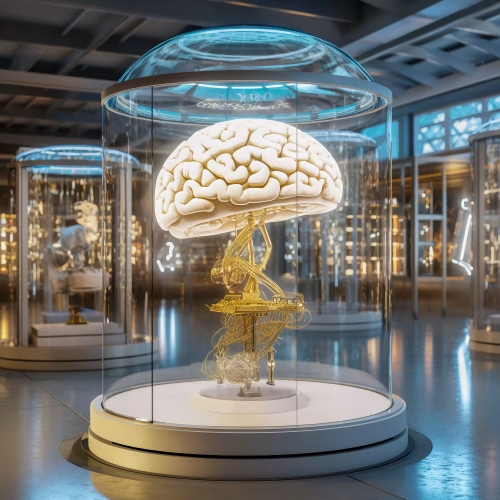
The Dawn of Computational Neuroscience: Decoding the Brain's Algorithms
At the heart of modern brain research lies computational neuroscience. This burgeoning discipline employs mathematical models, theoretical analysis, and sophisticated computer simulations to unravel the complex algorithms that the brain uses to process information. By translating biological processes into computational frameworks, researchers can test hypotheses, predict neural behavior, and gain insights that would be impossible through experimental methods alone. Imagine simulating the firing patterns of thousands of neurons or modeling how learning occurs at the synaptic level – this is the power of computational neuroscience. It's instrumental in understanding how neural networks form, adapt, and give rise to complex behaviors.
The ability to model the brain's functions computationally is transforming our approach to neurological disorders. By identifying dysfunctional patterns in simulated neural networks, scientists can pinpoint potential targets for intervention, paving the way for more effective therapies. This synergy between biology and computation is a prime example of deep science innovation in neuroscience, pushing the boundaries of what we thought was possible.
Neurotechnology and Biotechnology: Tools for Exploration and Intervention
The progress in neuroscience is inextricably linked to advancements in neurotechnology and biotechnology. These fields provide the essential tools that allow scientists to observe, measure, and even manipulate brain activity with unprecedented precision. Neuroimaging techniques, such as fMRI and PET scans, have revolutionized our ability to perform brain mapping, allowing us to visualize active regions of the brain during various tasks. These non-invasive methods provide crucial insights into cognitive neuroscience, helping us understand how different brain areas contribute to thought, memory, and language.
Beyond imaging, neurotechnology encompasses a wide array of innovations. Brain-computer interfaces (BCIs), for instance, are enabling individuals with paralysis to control prosthetic limbs or communicate through thought alone. Neuroprosthetics are restoring sensory and motor functions, offering hope to millions. In parallel, biotechnology plays a vital role by developing novel biosensors, gene-editing tools like CRISPR for studying neural circuits, and advanced drug delivery systems that can precisely target specific brain regions. The convergence of these technologies is accelerating the pace of brain research, allowing for more detailed investigations into the fundamental unit of communication: the synapse.
The Significance of the Synapse: The Brain's Communication Hub
The synapse, the tiny gap between two neurons where information is transmitted, is a critical focal point in neuroscience. Understanding synaptic function is key to unlocking the mysteries of learning, memory, and neurological disorders. Disruptions in synaptic communication are implicated in conditions ranging from Alzheimer's and Parkinson's to depression and schizophrenia. Advanced microscopic techniques and electrophysiological recordings allow researchers to observe and analyze synaptic activity in real-time, providing invaluable data for both theoretical models in computational neuroscience and the development of new pharmacological interventions.
Moreover, the study of the synapse is fundamental to understanding how neural networks adapt and change—a process known as synaptic plasticity. This adaptive capacity is the biological basis for learning and memory formation. Insights gained here are not only advancing basic science but also inspiring the design of more sophisticated artificial intelligence systems, demonstrating how biological principles can drive technological innovation.
From Brain Mapping to Cognitive Neuroscience: Understanding the Mind
The ambitious goal of brain mapping aims to create comprehensive maps of the brain's structure and function, detailing its intricate connections. Projects like the Human Connectome Project are generating unprecedented datasets that provide a foundational understanding of how different brain regions are interconnected and how these connections relate to behavior and cognition. This massive undertaking is a testament to the collaborative spirit driving deep science innovation.
Building upon these structural maps, cognitive neuroscience seeks to understand the neural mechanisms underlying mental processes such as attention, perception, memory, language, and decision-making. By combining insights from psychology, neurology, and advanced neuroimaging, cognitive neuroscientists are revealing how complex human behaviors emerge from the activity of specific brain circuits. This interdisciplinary approach is crucial for developing effective strategies for cognitive enhancement and for treating cognitive impairments associated with neurological and psychiatric conditions.
Embracing the Future: Deep Science Workshops and Deep Science Implementation
The rapid advancements in neuroscience, fueled by breakthroughs in computational neuroscience, neurotechnology, and biotechnology, underscore the need for continuous learning and practical application. Organizations like Nanoschool are at the forefront of this educational revolution, offering specialized programs designed to equip the next generation of scientists and innovators. Through intensive Deep Science Workshops, participants gain hands-on experience with cutting-edge techniques in brain research, from advanced data analysis of neuroimaging data to the practical application of machine learning in understanding neural networks.
These workshops bridge the gap between theoretical knowledge and practical skills, preparing individuals for real-world challenges in the field. The focus on Deep Science Implementation ensures that participants are not just learning concepts but are also capable of applying them to solve complex problems, whether in academic research, pharmaceutical development, or the burgeoning neurotech industry. This commitment to practical, impactful education is vital for translating scientific discoveries into tangible benefits for society.
The journey into the brain's mysteries is far from over, but the tools and knowledge we now possess are propelling us forward at an unprecedented pace. The synergy between diverse fields—from the molecular intricacies of a synapse to the grand architecture revealed by brain mapping, and the analytical power of computational neuroscience—is creating a vibrant ecosystem of discovery. As we continue to push the boundaries of neuroscience, the potential for improving human health, enhancing cognitive abilities, and developing revolutionary technologies is immense. Join us in this exciting exploration of the brain, where deep science innovation in neuroscience is not just a concept, but a living, evolving reality.
Join NowFrequently Asked Questions About Neuroscience and Brain Research
What is neuroscience?
Neuroscience is the scientific study of the nervous system, including the brain, spinal cord, and all the nerves that connect them. It is an interdisciplinary field that combines physiology, anatomy, molecular biology, developmental biology, cytology, computer science, and mathematical modeling to understand the fundamental and emergent properties of neurons and neural circuits.
How does computational neuroscience contribute to brain research?
Computational neuroscience uses mathematical models, theoretical analysis, and computer simulations to understand the principles that govern the development, structure, physiology, and cognitive abilities of the nervous system. It helps researchers interpret complex experimental data, predict neural behavior, and design new experiments, bridging the gap between molecular and cognitive levels of understanding.
What is neurotechnology and its impact?
Neurotechnology encompasses any technology that has a significant impact on how people understand the brain and various aspects of consciousness, thought, and higher-order brain activities. This includes tools for neuroimaging, brain-computer interfaces (BCIs), neuroprosthetics, and advanced therapies for neurological disorders, revolutionizing treatment and enhancing human capabilities.
Why are neural networks important in understanding the brain?
Neural networks, both biological and artificial, are fundamental to understanding how the brain processes information. Biological neural networks are interconnected groups of neurons that transmit signals. Studying them helps us understand learning, memory, and perception. Artificial neural networks, inspired by the brain, are used in AI to solve complex problems, offering insights into potential brain mechanisms and applications in areas like pattern recognition and data analysis.
What role does biotechnology play in neuroscience?
Biotechnology provides essential tools and techniques for advancing neuroscience research. This includes genetic engineering to study gene function in neurons, developing biosensors for real-time monitoring of brain activity, creating novel drug delivery systems for neurological disorders, and producing advanced biomaterials for neural tissue engineering and regenerative medicine. It's crucial for developing new diagnostic and therapeutic approaches.