
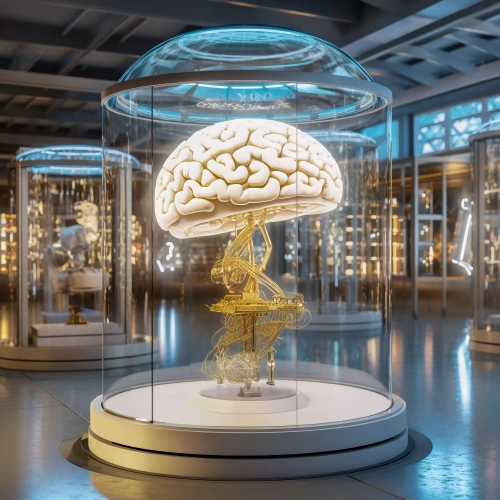
The Essence of Computational Neuroscience
Computational neuroscience is more than just a discipline; it's a powerful and essential methodology for understanding the brain's intricate operations. It involves developing sophisticated mathematical models and computational simulations to rigorously explore how neural circuits process information, how memories are meticulously formed, how complex decisions are made, and how sensory inputs are interpreted. This truly interdisciplinary approach allows researchers to formulate and rigorously test hypotheses about brain function that would be nearly impossible through purely experimental means alone. Our program delves deep into these core concepts, providing a robust and comprehensive foundation for anyone looking to excel in cutting-edge neuroscience research and contribute meaningfully to global brain research initiatives. You'll learn to quantify biological phenomena, predict neural behavior, and interpret the vast datasets generated by modern neuroscientific experiments.
From Neurons to Networks: Core Principles
A fundamental cornerstone of computational neuroscience is the detailed study of neural networks, both biological and artificial. In our program, you will meticulously explore how individual neurons communicate through precise electrical and chemical signals, and critically, how these myriad interactions give rise to complex emergent properties at the network level, underpinning all brain functions. Understanding synaptic plasticity – the remarkable ability of synapses to strengthen or weaken over time in response to activity – is absolutely crucial, as it forms the biological basis for learning, memory, and adaptation. Our meticulously crafted curriculum comprehensively covers these fundamental principles, equipping you with the advanced analytical and computational tools necessary to dissect, interpret, and even predict complex neural activity patterns. This comprehensive and hands-on approach ensures that participants truly learn computational neuroscience from the ground up, building a solid theoretical and practical understanding.
Advanced Techniques and Applications
Beyond the foundational basics, our program seamlessly transitions into sophisticated techniques and cutting-edge applications used in modern computational neuroscience. This includes advanced data analysis methodologies for complex neurophysiological data, the application of state-of-the-art machine learning algorithms in brain imaging and neural decoding, and the development of large-scale, realistic brain models. You'll gain invaluable hands-on experience with industry-standard programming languages (like Python) and specialized software tools essential for building, simulating, and analyzing complex neural systems. The exciting convergence of AI neuroscience and advanced neurotechnology is rapidly revolutionizing how we approach neurological disorders, develop innovative brain-computer interfaces, and create intelligent systems inspired by biological brains. Our intensive Deep Science Workshops provide unparalleled practical insights into these cutting-edge applications, rigorously preparing you for the most challenging and rewarding real-world problems in the field.
Career Pathways in a Growing Field
The demand for highly skilled professionals in computational neuroscience is experiencing rapid expansion across diverse sectors including academia, industry, and healthcare. Graduates of our program are exceptionally well-prepared for a wide array of impactful neuroscience jobs in areas such as neurotechnology development, advanced pharmaceutical research, data science within the burgeoning biotechnology sector, and cutting-edge AI development. Whether your ultimate ambition lies in contributing to groundbreaking brain research breakthroughs, designing next-generation neural interfaces that restore function, or developing highly intelligent systems inspired by the human brain, our program offers the precise expertise and practical skills needed to thrive. The analytical and computational skills acquired are highly transferable, making you an exceptionally valuable asset in the broader scientific and technological landscape, extending far beyond traditional neuroscience roles.
Why Choose Our Neuroscience Courses?
At Deep Science Implementation, we are unwavering in our commitment to providing an unparalleled and transformative learning experience. Our neuroscience courses are meticulously designed and continuously updated by leading experts in the field, seamlessly blending rigorous theoretical knowledge with immersive, hands-on projects and real-world case studies. We passionately emphasize a problem-solving approach, actively encouraging critical thinking, independent research, and innovative solutions to complex neuroscientific questions. From understanding the fundamental principles of neural coding and dynamics to implementing advanced computational models for brain function, our program ensures a holistic and deeply engaging learning journey. We cultivate a supportive and collaborative environment where you can confidently engage with complex concepts, actively collaborate with talented peers, and receive personalized mentorship from experienced faculty. This unwavering commitment to academic excellence and practical relevance ensures you truly learn computational neuroscience effectively and comprehensively, ready to make a significant impact.
Conclusion
The human brain remains the most complex and fascinating known structure in the universe, and computational neuroscience offers the most powerful and insightful lens through which to understand its intricate workings. By joining our program, you're not just enrolling in exceptional neuroscience courses; you're stepping into a vibrant and dynamic community dedicated to pushing the boundaries of scientific discovery and technological innovation. Equip yourself with the essential skills to decipher the brain's profound code and contribute meaningfully to the next generation of scientific breakthroughs and technological advancements. Your journey to mastering computational neuroscience, from fundamental principles to advanced techniques, begins here. Don't miss this unparalleled opportunity to profoundly transform your understanding, elevate your skills, and accelerate your career in this rapidly evolving and crucial field.
Frequently Asked Questions (FAQs)
What is computational neuroscience?
Computational neuroscience is an interdisciplinary field that uses mathematical models, theoretical analysis, and computational simulations to understand the structure, function, and dynamics of the nervous system. It combines neuroscience, computer science, physics, and mathematics to unravel brain complexities.
What career opportunities are available after studying computational neuroscience?
Graduates can pursue careers in academia (researcher, professor), industry (neurotechnology, AI neuroscience engineering, data science in biotechnology, pharmaceutical research), and healthcare (medical device development, neuro-rehabilitation). Roles often involve analyzing complex neural data, developing brain-inspired AI, or designing neuroprosthetics. These are highly sought-after neuroscience jobs.
Is prior programming experience required for this program?
While some basic programming familiarity is beneficial, our program is designed to accommodate individuals with varying levels of experience. We provide foundational modules to bring everyone up to speed on essential programming concepts relevant to computational neuroscience.
How does this program differ from traditional neuroscience courses?
Unlike traditional neuroscience, which might focus more on biological experimentation, our program emphasizes the quantitative and computational aspects of brain research. We equip students with the skills to model neural networks, analyze large datasets, and simulate brain functions, preparing them for data-driven roles in the field. Our neuroscience courses are uniquely tailored for this modern approach.
What are the key topics covered in the program?
The program covers a wide range of topics including neural coding, synaptic plasticity, neural networks (both biological and artificial), brain imaging data analysis, machine learning for neuroscience, and computational models of cognition and behavior. It's designed to help you truly learn computational neuroscience comprehensively.