
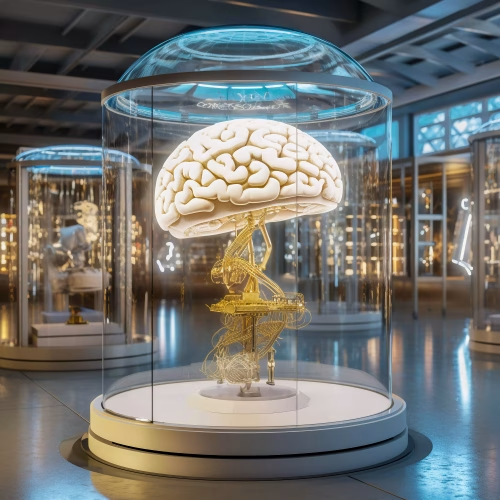
The Foundational Principles: Neuroplasticity and Brain Mapping
At the heart of modern rehabilitation lies the concept of neuroplasticity – the brain's remarkable ability to reorganize itself by forming new neural connections throughout life. This inherent adaptability is the biological basis for recovery after neurological injury, such as stroke, traumatic brain injury, or spinal cord injury. Understanding how neurons adapt and rewire is paramount. Intensive, task-specific training, guided by principles of motor learning and enriched environments, encourages the brain to create new pathways, allowing individuals to regain lost motor skills, sensation, and even cognitive functions. Advanced brain mapping techniques, including fMRI and EEG, enable clinicians and researchers to visualize these changes in real-time, providing invaluable insights into the recovery process and guiding personalized therapeutic interventions. This profound understanding of the brain's dynamic nature is a cornerstone of effective neuroscience-driven approaches.
Advanced Neurotechnologies and Therapeutic Innovations
The convergence of neuroscience and biotechnology has given rise to an exciting array of neurotechnologies that are transforming patient recovery. These technologies are designed to directly interact with the nervous system, augmenting the brain's natural capacity for recovery. Examples include:
- Brain-Computer Interfaces (BCIs): These revolutionary systems allow individuals to control external devices, such as robotic limbs or computer cursors, directly with their thoughts. For patients with severe paralysis, BCIs offer unprecedented independence and a pathway to reconnect with their environment, leveraging the brain's inherent signaling capabilities.
- Robotic Exoskeletons and Assistive Devices: Robotics are increasingly integrated into physical therapy, providing repetitive, high-intensity training that would be impossible manually. These devices can assist movement, provide resistance, and track progress, accelerating motor recovery and enhancing engagement.
- Virtual Reality (VR) and Augmented Reality (AR) Therapy: VR/AR platforms create immersive, engaging environments for therapeutic exercises. They can simulate real-world scenarios, provide immediate feedback, and make repetitive tasks more enjoyable, improving patient motivation and adherence to therapy. This is particularly beneficial for cognitive improvement and balance training.
- Non-Invasive Brain Stimulation (NIBS): Techniques like Transcranial Magnetic Stimulation (TMS) and Transcranial Direct Current Stimulation (tDCS) can modulate brain activity, enhancing neuroplasticity and facilitating learning. Research continues to explore their optimal application in various neurological conditions.
These innovations represent the forefront of neuroscience-informed therapeutic strategies, pushing the boundaries of what's possible in functional recovery.
Targeting Specific Conditions: A Neuroscience Approach
The application of neuroscience principles has profound implications across a spectrum of neurological conditions requiring restorative care:
Stroke Recovery
Post-stroke recovery is heavily influenced by neuroscience. Understanding lesion locations, neural networks, and the mechanisms of spontaneous recovery allows for targeted interventions. Constraint-induced movement therapy, mirror therapy, and electrical stimulation are examples of neuroscience-backed approaches that promote cortical reorganization and functional improvement in affected limbs. The goal is to encourage the surviving neurons to take over functions from damaged areas, strengthening existing and forming new synapses.
Spinal Cord Injury (SCI)
For SCI, research in neural regeneration and activity-based therapies is paramount. While complete regeneration remains a challenge, neuroscience-driven approaches focus on maximizing residual function, promoting plasticity below the injury site, and utilizing technologies like epidural stimulation and robotic gait training to facilitate movement and improve quality of life. The intricate interplay of ascending and descending neural pathways is a key area of study in neurology.
Traumatic Brain Injury (TBI) and Neurodegenerative Diseases
TBI often results in complex cognitive and motor deficits. Neuroscience guides individualized recovery plans, focusing on specific cognitive domains (e.g., memory, attention) and motor control. For neurodegenerative diseases like Parkinson's or Alzheimer's, therapeutic interventions aim to slow progression, manage symptoms, and maintain function. Deep Brain Stimulation (DBS) for Parkinson's, for instance, is a direct application of understanding specific neural circuits and their modulation. Ongoing research in these areas continues to unveil new therapeutic avenues.
The Role of Research and Biotechnology in Advancing Recovery
The rapid evolution of recovery science is inextricably linked to advancements in fundamental neuroscience research and the innovative power of biotechnology. From understanding the molecular mechanisms of neural repair to developing sophisticated diagnostic tools and therapeutic devices, biotechnology provides the essential tools and platforms. Collaborative efforts between neuroscientists, engineers, clinicians, and patients are driving discoveries that translate from the lab bench to the bedside. This includes developing new pharmacological agents that enhance neuroplasticity, advanced imaging techniques that provide unprecedented views of brain activity, and sophisticated algorithms for analyzing neural data, especially concerning the function and dysfunction of synapses. The continuous cycle of research, development, and clinical application ensures that patient care practices remain at the forefront of scientific understanding.
Computational Synapses and Future Directions
A fascinating frontier in neuroscience and restorative care is the study of computational synapses. This involves using computational models to understand the complex information processing that occurs at the synaptic level and how this impacts overall brain function and recovery. By simulating neural networks and synaptic plasticity, researchers can predict optimal recovery strategies, design more effective neuroprosthetics, and even develop AI-driven therapeutic interventions. This interdisciplinary approach, combining theoretical neuroscience with practical biotechnology, holds immense potential for personalized medicine and truly adaptive technologies. The future of neurology and patient recovery will undoubtedly be shaped by these computational insights, leading to more precise and powerful interventions.
For those passionate about delving deeper into these cutting-edge fields, Deep Science Workshops and Deep Science Implementation offer unparalleled opportunities. Our programs, such as "Neuroscience: Fundamental Principles to Computational Synapses," are designed to equip you with comprehensive knowledge and practical skills, enabling you to contribute to the next wave of innovations in neuroscience and patient recovery. Whether you are a student, researcher, or professional, our workshops provide a unique blend of theoretical understanding and hands-on experience, bridging the gap between academic learning and real-world application in biotechnology.
Join NowFrequently Asked Questions (FAQ)
What is the primary goal of applying neuroscience to rehabilitation?
The primary goal is to leverage our understanding of the brain's structure and function, particularly neuroplasticity, to develop more effective and targeted interventions that promote recovery and improve functional outcomes for individuals with neurological impairments.
How does neuroplasticity play a role in rehabilitation?
Neuroplasticity is the brain's remarkable ability to reorganize itself by forming new neural connections throughout life. In rehabilitation, it's harnessed through intensive, task-specific training to help the brain compensate for damage, rewire pathways, and regain lost functions.
What are some emerging neurotech applications in rehabilitation?
Emerging neurotechnologies include brain-computer interfaces (BCIs), robotic exoskeletons, virtual reality (VR) for therapy, transcranial magnetic stimulation (TMS), and deep brain stimulation (DBS). These technologies aim to enhance neural recovery and provide assistive solutions.
Can neuroscience-based rehabilitation help with cognitive impairments?
Absolutely. Neuroscience informs strategies for cognitive rehabilitation, addressing issues like memory, attention, and executive function. Techniques often involve targeted cognitive exercises, neurofeedback, and interventions designed to stimulate specific brain regions involved in cognitive processes.
Where can I learn more about neuroscience and its applications in rehabilitation?
Programs like the 'Neuroscience: Fundamental Principles to Computational Synapses' offered by Deep Science Workshops provide comprehensive insights into this field, from basic principles to advanced computational and practical applications.