
Unlock the Brain's Secrets: Master Computational Neuroscience with Our Online Course
The human brain, a marvel of biological engineering, processes information with unparalleled complexity. Understanding its intricate workings requires a multidisciplinary approach, where computational neuroscience stands at the forefront. This dynamic field merges biology, physics, mathematics, and computer science to unravel the mysteries of neural circuits, cognition, and behavior. If you're passionate about brain research and aspire to contribute to groundbreaking discoveries in neurotechnology, mastering these advanced techniques is no longer an option—it's a necessity. Deep Science Workshops proudly presents a comprehensive online course designed to equip you with the essential skills and knowledge to navigate this exciting domain.
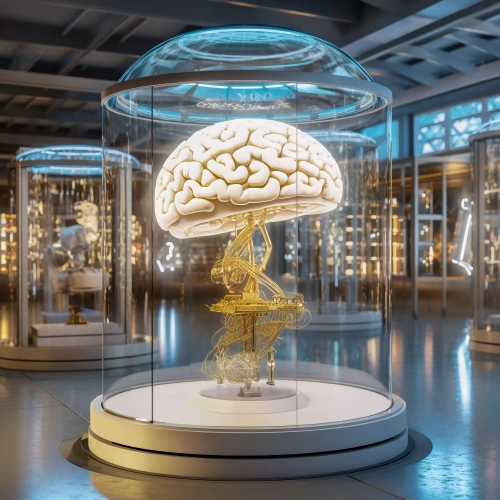
What is Computational Neuroscience?
This discipline is the bridge between the biological wetware of the brain and the abstract world of algorithms and models. It involves developing theoretical models, simulations, and analytical tools to understand the principles governing the nervous system. From the firing patterns of individual neurons to the emergent properties of large-scale neural networks, this field provides a quantitative framework for exploring how the brain computes. Researchers in this area use advanced programming, data analysis, and mathematical modeling to interpret experimental data and predict neuronal behavior. It's a critical component of modern neuroscience, driving innovation in areas like artificial intelligence, brain-computer interfaces, and the development of novel therapies for neurological disorders.
Why Master These Techniques?
The demand for experts in computational neuroscience is rapidly expanding across academia, industry, and healthcare. As brain research becomes increasingly data-intensive, the ability to analyze complex datasets, build predictive models, and simulate biological processes is invaluable. Whether you're a student looking to specialize, a researcher aiming to enhance your analytical toolkit, or a professional seeking to transition into the burgeoning field of neurotechnology, this expertise opens doors to diverse career paths. Our comprehensive program is specifically tailored to address this growing need, providing a robust foundation in both theoretical concepts and practical application. You'll gain proficiency in using cutting-edge research tools and understanding the principles behind advanced lab equipment, preparing you for significant contributions to scientific publications.
Introducing Deep Science Workshops: Your Gateway to Expertise
At Deep Science Workshops, we believe in empowering the next generation of scientific innovators. Our "Neuroscience: Fundamental Principles to Computational Synapses" program is more than just an online course; it's an immersive learning experience. We bridge the gap between theoretical understanding and practical implementation, ensuring you don't just learn concepts but can apply them effectively. This program is ideal for anyone interested in delving deep into the mechanics of the brain from a quantitative perspective. Our curriculum is meticulously crafted by experts in neuroscience and computational neuroscience, ensuring relevance and rigor.
Course Highlights and Learning Outcomes
This comprehensive computational neuroscience course online covers a wide spectrum of topics, starting from the fundamental principles of neuronal function and progressing to advanced computational modeling. You will:
- Understand the electrical and chemical properties of neurons.
- Explore the dynamics of synapses and neural circuits.
- Learn to build and simulate computational models of neurons and neural networks.
- Gain proficiency in programming languages and software commonly used in brain research.
- Analyze complex neurophysiological data.
- Apply computational techniques to real-world problems in neurotechnology and biotechnology.
- Develop critical thinking and problem-solving skills essential for cutting-edge scientific publications.
Our focus is on practical skills, enabling you to confidently use various research tools and interpret data from sophisticated lab equipment.
Who Should Enroll?
This program is designed for a diverse audience, including:
- Undergraduate and graduate students in neuroscience, biology, computer science, engineering, physics, and mathematics.
- Researchers and postdocs seeking to incorporate computational methods into their brain research.
- Professionals in biotechnology and pharmaceutical industries interested in neural data analysis and modeling.
- Anyone with a strong quantitative background and a keen interest in understanding the brain through a computational lens.
No prior advanced knowledge of computational neuroscience is required, though a basic understanding of biology and mathematics will be beneficial.
The Deep Science Implementation Advantage
What sets Deep Science Implementation apart is our commitment to hands-on learning and real-world application. We don't just teach theory; we provide the frameworks and practical exercises that allow you to build, simulate, and analyze. Our instructors are experienced practitioners and researchers, bringing their insights directly into the virtual classroom. You'll engage with interactive modules, participate in coding challenges, and work on projects that mirror actual brain research scenarios. This approach ensures that upon completion, you are not just knowledgeable but truly skilled, ready to contribute to the next wave of advancements in neurotechnology and biotechnology. Our alumni often contribute to significant scientific publications, a testament to the quality of our training.
Beyond the Classroom: Community and Resources
Enrolling in our online course also grants you access to a vibrant community of learners and experts. You'll have opportunities to network, collaborate on projects, and discuss the latest trends in neuroscience and brain research. We also provide curated resources, including access to relevant research tools, recommended readings, and updates on new developments in neurotechnology and biotechnology. Our goal is to foster a continuous learning environment that supports your growth long after the course concludes.
The Future of Brain Research is Computational
The future of understanding and manipulating the brain lies increasingly in computational approaches. From developing more effective treatments for neurological disorders to designing advanced artificial intelligence systems inspired by biological neural networks, the applications of computational neuroscience are limitless. By mastering these techniques through our comprehensive online course, you position yourself at the forefront of this revolution. Join Deep Science Workshops and become a pioneer in unlocking the brain's deepest secrets. This is your chance to make a tangible impact on brain research and contribute to the next generation of neurotechnology.
Frequently Asked Questions
Q1: What prerequisites are needed for this computational neuroscience course online?
A1: While no advanced prior knowledge of computational neuroscience is strictly required, a basic understanding of biology, mathematics (calculus, linear algebra), and some programming experience (e.g., Python) will be beneficial. The program is designed to guide you from fundamental principles.
Q2: How long does it take to complete the online course?
A2: The program is self-paced, allowing you to learn at your convenience. However, we provide a recommended schedule for optimal learning. The total estimated time commitment is approximately 60-80 hours, depending on your prior knowledge and dedication.
Q3: Will I receive a certificate upon completion?
A3: Yes, upon successful completion of all modules and assessments, you will receive a certificate of completion from Deep Science Workshops, validating your mastery of computational neuroscience techniques. This certificate can enhance your profile for roles in brain research, neurotechnology, and biotechnology.
Q4: What kind of research tools and software will be used in the course?
A4: The program will introduce you to various industry-standard research tools and software environments commonly used in computational neuroscience, such as Python libraries (NumPy, SciPy, Matplotlib), neural simulation platforms (e.g., NEURON, Brian), and data analysis tools. Specific software requirements will be detailed at the beginning of the program.
Q5: How does this course prepare me for a career in neurotechnology or biotechnology?
A5: This program provides a strong foundation in the quantitative skills essential for these fields. You'll learn to analyze complex biological data, build predictive models, and understand the computational principles behind neural devices. These skills are highly sought after in roles related to brain-computer interfaces, neural prosthetics, drug discovery in neuroscience, and advanced medical diagnostics, preparing you for significant contributions to scientific publications and industry innovation.