
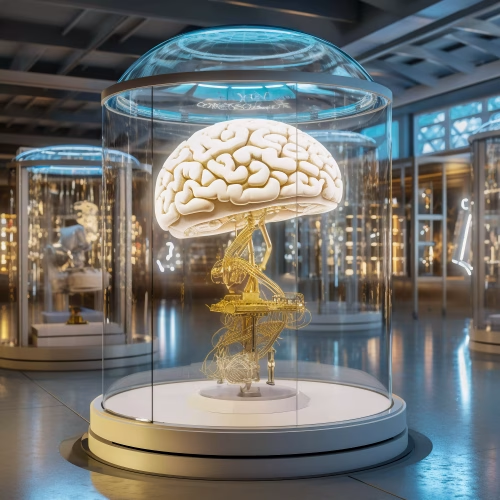
The Essence of Computational Neuroscience: Bridging Disciplines
At its heart, computational neuroscience is about building bridges. It connects the microscopic world of neurons and synapses with the macroscopic world of cognition and behavior. Researchers in this field develop mathematical models and computer simulations to test hypotheses about how the brain works. For instance, they might model the electrical activity of a single neuron, simulate the interactions within a small neural circuit, or even create large-scale models of entire brain regions. This approach allows scientists to manipulate variables, observe outcomes, and gain insights that might be impossible through purely experimental methods. It's a powerful synergy that accelerates brain research and pushes the boundaries of what we thought possible.
From Neurons to Networks: Understanding Brain Dynamics
One of the foundational concepts in computational neuroscience is understanding how individual neurons communicate and form complex neural networks. The strength and efficiency of these connections are not static; they change over time through a process called synaptic plasticity. This remarkable ability of synapses to strengthen or weaken is the biological basis for learning and memory. Computational models allow us to simulate these changes, exploring how different learning rules affect network behavior and how memories might be encoded and retrieved. This deep dive into synaptic plasticity is not just academic; it has direct implications for understanding neurological disorders and for developing more sophisticated artificial intelligence.
The field also heavily relies on neuroinformatics, which involves the application of computational tools to organize, analyze, and share large volumes of neuroscience data. As techniques like fMRI and EEG generate vast datasets, neuroinformatics becomes indispensable for extracting meaningful patterns and insights. This data-driven approach, coupled with advanced algorithms, is key to progress in brain mapping efforts, aiming to create comprehensive atlases of brain connectivity and function.
The Impact on Brain Research and Neurotechnology
The contributions of computational neuroscience to modern brain research are immense. It helps interpret complex experimental data, predict experimental outcomes, and generate new hypotheses. For example, computational models have been instrumental in understanding how sensory information is processed, how motor commands are generated, and how decisions are made. This theoretical framework complements experimental work, creating a holistic approach to understanding the brain.
Beyond fundamental research, computational neuroscience is a driving force behind the development of groundbreaking neurotechnology. This includes brain-computer interfaces (BCIs) that allow individuals to control prosthetic limbs or communicate using only their thoughts, neuro-prosthetics designed to restore lost sensory or motor functions, and advanced diagnostic tools for neurological conditions. The principles derived from understanding biological neural networks are also inspiring the next generation of artificial intelligence and machine learning algorithms, leading to breakthroughs in areas far beyond traditional neuroscience.
The intersection with biotechnology is particularly strong. From designing new drugs that target specific neural pathways to developing gene therapies for neurological disorders, computational models provide a crucial testing ground, allowing researchers to simulate the effects of interventions before costly and time-consuming in-vivo experiments. This accelerates the pace of discovery and brings us closer to effective treatments for conditions like Alzheimer's, Parkinson's, and epilepsy.
Why Choose a Program in Computational Neuroscience?
For aspiring scientists, engineers, and innovators, a program focused on computational neuroscience offers a unique and highly relevant skill set. It equips you with the analytical rigor to tackle complex biological problems, the programming expertise to build sophisticated models, and the interdisciplinary perspective to collaborate across diverse fields. Understanding the field of computational neuroscience through a structured program, such as the 'Neuroscience: Fundamental Principles to Computational Synapses' offered by Deep Science Workshops, provides a robust foundation.
Such programs typically cover a wide range of topics, including mathematical modeling of neurons and networks, data analysis techniques for neurophysiological data, machine learning applications in neuroscience, and the principles of synaptic plasticity. They often involve hands-on projects, allowing participants to apply theoretical knowledge to real-world problems and develop practical skills in computational simulation and data interpretation. This comprehensive training prepares individuals for careers in cutting-edge brain research, the burgeoning neurotechnology industry, or advanced roles in biotechnology and AI.
Furthermore, staying connected with the latest advancements is crucial. Participating in neuroscience conferences and workshops, like those organized by Deep Science Workshops, offers invaluable opportunities to network with leading experts, learn about emerging trends, and present your own research. These events are vital for professional development and for keeping abreast of the rapid innovations in neuroinformatics and brain mapping.
The Future is Now: Deep Science Implementation
The future of neuroscience is undeniably computational. As we generate more data about the brain than ever before, the ability to analyze, model, and simulate becomes paramount. Initiatives like Deep Science Implementation are crucial for translating theoretical knowledge into practical applications, driving innovation in both fundamental understanding and clinical solutions. Whether it's refining our understanding of consciousness, developing personalized treatments for neurological disorders, or creating truly intelligent machines, computational neuroscience is at the forefront.
Embracing this field means stepping into a domain where the boundaries between biology, engineering, and computer science blur, creating fertile ground for groundbreaking discoveries. It's an opportunity to contribute to one of humanity's greatest quests: understanding itself. By mastering the principles and tools of computational neuroscience, you become part of a global community dedicated to pushing the frontiers of knowledge and improving human lives through advanced neurotechnology and insightful brain research.