
The human brain, an organ of unparalleled complexity, remains one of the greatest frontiers in scientific exploration. Its intricate networks, billions of neurons, and the profound mysteries surrounding neurological and psychiatric disorders present formidable challenges and immense opportunities for scientific advancement. In this landscape, neuroscience stands at the forefront, tirelessly working to unravel these complexities and pave the way for groundbreaking therapeutic interventions. The journey of drug discovery and development in neuroscience is a testament to human ingenuity, perseverance, and the collaborative spirit of researchers worldwide. It is a field where fundamental understanding meets cutting-edge biotechnology, where every discovery brings us closer to alleviating suffering caused by debilitating brain conditions.
From understanding the basic principles of neuronal function to developing sophisticated computational models of synapses, the scope of modern neuroscience is vast. This article delves into the critical stages and innovative approaches driving the search for new treatments, highlighting the pivotal role of various scientific disciplines and the essential tools that make this progress possible. We will explore how breakthroughs in genetics, molecular biology, and cell biology are transforming our understanding of brain diseases, and how these insights are translated into potential therapies. Join us as we navigate the exciting, yet challenging, path of bringing new hope to millions affected by neurological disorders.
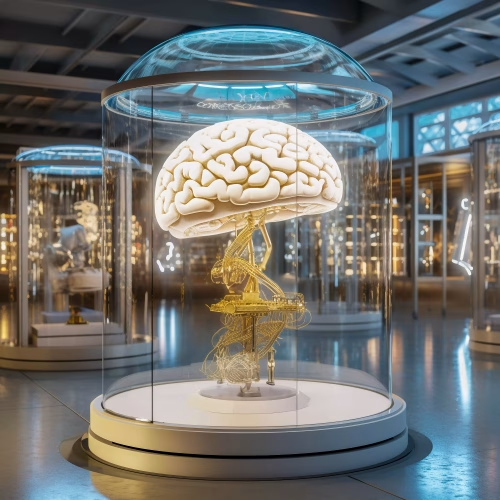
Developing drugs for the brain is inherently more complex than for many other organ systems. The brain's unique physiology, including the highly selective blood-brain barrier (BBB), poses a significant hurdle for drug delivery. This protective mechanism, while vital for maintaining brain homeostasis, often prevents therapeutic molecules from reaching their targets in sufficient concentrations. Furthermore, the sheer complexity of neural circuits and the multifactorial nature of neurological disorders, often involving a combination of genetic predispositions and environmental factors, make target identification and validation exceptionally challenging. Conditions like Alzheimer's disease, Parkinson's disease, multiple sclerosis, and various psychiatric disorders such as depression and schizophrenia, are not caused by a single, easily identifiable pathogen, but rather by complex dysregulations within the brain. This necessitates a deep, nuanced understanding of brain research at every level, from individual neurons to complex neural networks.
At the heart of modern neuroscience drug discovery lies a profound reliance on foundational biological sciences. Advances in genetics have revolutionized our ability to pinpoint specific genes and genetic variations associated with neurological and psychiatric conditions. Techniques like genome-wide association studies (GWAS) and next-generation sequencing are uncovering novel disease pathways and potential therapeutic targets. Understanding the genetic underpinnings of diseases like Huntington's or certain forms of epilepsy provides crucial entry points for intervention.
Complementing genetics, molecular biology and cell biology provide the tools to dissect disease mechanisms at a granular level. Researchers use these disciplines to study protein misfolding in neurodegenerative diseases, synaptic dysfunction in psychiatric disorders, and the inflammatory responses in neuro-immunological conditions. Techniques such as CRISPR-Cas9 for gene editing, optogenetics for controlling neuronal activity, and advanced microscopy for visualizing cellular processes in real-time are indispensable. These insights are critical for designing drugs that can precisely modulate specific molecular targets or restore cellular function, moving beyond symptomatic treatments towards disease modification. The integration of these fields allows for a holistic understanding of neurological pathologies.
Biotechnology serves as the engine driving innovation in neuroscience drug discovery. It provides the advanced methodologies and platforms necessary to screen vast libraries of compounds, develop sophisticated in vitro and in vivo models, and engineer novel therapeutic modalities. From high-throughput screening for identifying lead compounds to the development of viral vectors for gene therapy, biotechnology accelerates every stage of the drug development pipeline. The advent of induced pluripotent stem cell (iPSC) technology, for instance, allows scientists to generate patient-specific neurons and glial cells, creating more physiologically relevant models for disease modeling and drug testing, thereby reducing reliance on animal models and improving translatability.
The progress in brain research would be severely hampered without specialized research tools and comprehensive lab supplies. These include state-of-the-art imaging systems (e.g., fMRI, PET, advanced microscopy), electrophysiology setups for recording neuronal activity, sophisticated cell culture systems, and an array of biochemical reagents and consumables. These tools enable researchers to conduct precise experiments, gather robust data, and validate hypotheses. The quality and availability of these supplies directly impact the efficiency and success rate of preclinical research, ensuring that potential drug candidates are thoroughly vetted before advancing to clinical trials. For institutions and researchers engaged in cutting-edge brain science, having access to the latest and most reliable research tools and lab supplies is paramount.
The journey of a drug from initial concept to patient availability is a long and arduous one, particularly in neurology. It typically begins with target identification and validation, where specific molecules or pathways implicated in disease are chosen. This is followed by lead discovery, involving the screening of chemical libraries to find compounds that interact with the target. Lead optimization then refines these compounds to improve their efficacy, safety, and pharmacokinetic properties.
Preclinical testing involves extensive in vitro and in vivo studies to assess a drug's safety and efficacy before human trials. This stage is crucial for identifying potential toxicities and understanding how the drug behaves in a living system. If preclinical results are promising, the drug moves into clinical trials, which are divided into three phases:
Only a small fraction of compounds that enter preclinical development ever make it to market, underscoring the immense challenges and rigorous standards of drug discovery in neuroscience. The process demands meticulous planning, substantial investment, and a deep understanding of disease biology and pharmacology.
The field of neuroscience drug discovery is rapidly evolving, driven by new scientific insights and technological advancements. Emerging frontiers include personalized medicine, where treatments are tailored to an individual's genetic makeup and specific disease profile, promising more effective and safer therapies. Gene therapies and antisense oligonucleotides are showing immense promise for genetic neurological disorders, offering the potential to correct the root cause of the disease rather than just managing symptoms.
Neuro-immunology, the study of interactions between the nervous and immune systems, is another exciting area, revealing new targets for conditions like multiple sclerosis and even neurodegenerative diseases. Furthermore, the integration of artificial intelligence (AI) and machine learning is revolutionizing data analysis, target identification, and drug design, significantly accelerating the discovery process. These innovations, coupled with a growing understanding of brain plasticity and connectivity, are opening up unprecedented avenues for therapeutic intervention.
To keep pace with these rapid advancements and to foster the next generation of scientists and innovators, comprehensive educational and training initiatives are crucial. Programs like Deep Science Workshops and Deep Science Implementation are vital in bridging the gap between theoretical knowledge and practical application in the complex realm of neuroscience and drug discovery. These workshops provide invaluable hands-on experience, covering everything from fundamental principles of brain function to advanced computational synapses, equipping participants with the skills necessary to contribute meaningfully to cutting-edge research and development. By offering specialized training in areas such as biotechnology, advanced research tools, and experimental design, these initiatives are directly contributing to the acceleration of progress in neurological health.
Join NowThe quest to understand and treat brain disorders is one of humanity's most ambitious scientific endeavors. The journey of drug discovery and development in neuroscience is a testament to the power of interdisciplinary collaboration, the relentless pursuit of knowledge, and the transformative potential of cutting-edge biotechnology. While challenges remain, the continuous breakthroughs in genetics, molecular biology, cell biology, and the development of sophisticated research tools and lab supplies are steadily illuminating the path forward. As we continue to unravel the brain's secrets, fueled by dedicated research and innovative educational platforms like Deep Science Workshops, the promise of effective treatments for neurological conditions moves ever closer to reality, offering hope and improved quality of life for millions worldwide.
What are the biggest challenges in neuroscience drug discovery?
Neuroscience drug discovery faces numerous challenges, including the complexity of the brain's neural networks, the presence of the blood-brain barrier (BBB) limiting drug delivery, difficulty in identifying precise disease targets, and the long, costly nature of clinical trials for neurological conditions. Understanding the intricate interplay of genetic and environmental factors also adds to the complexity.
How do genetics and molecular biology contribute to brain research?
Genetics and molecular biology are fundamental to brain research by enabling scientists to identify genes associated with neurological disorders, understand their functions, and explore how genetic mutations lead to disease. Molecular biology techniques allow for the study of proteins, signaling pathways, and cellular mechanisms at a detailed level, providing crucial insights into disease pathogenesis and potential therapeutic targets.
What role does biotechnology play in developing new neurological treatments?
Biotechnology is pivotal in developing new neurological treatments. It encompasses a wide range of tools and techniques, including recombinant DNA technology for producing therapeutic proteins, gene editing for correcting genetic defects, stem cell research for regenerative therapies, and advanced screening methods for identifying potential drug candidates. It drives innovation in areas like neuro-immunology and personalized medicine.
Why are specialized research tools and lab supplies crucial for neuroscience labs?
Specialized research tools and lab supplies are indispensable for neuroscience labs because they enable precise experimentation, data collection, and analysis. This includes advanced microscopes for imaging neural structures, electrophysiology equipment for studying neuronal activity, cell culture systems for in vitro models, and biochemical reagents for molecular analysis. These tools are essential for accurate and reproducible brain research.
How can one learn more about drug discovery in neuroscience?
To delve deeper into drug discovery in neuroscience, consider enrolling in specialized programs, workshops, or courses offered by institutions like Deep Science Workshops. These platforms provide comprehensive knowledge, from fundamental principles to computational approaches, equipping individuals with the skills needed to contribute to this vital field. Practical experience and staying updated with the latest research are also key.