
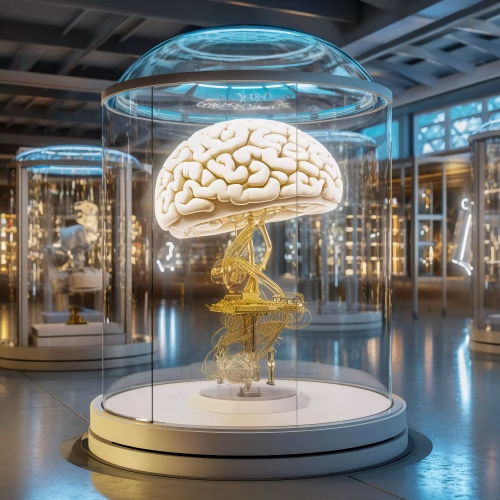
The Interdisciplinary Tapestry of Neuroscience
Neuroscience, by its very nature, is profoundly interdisciplinary. It seamlessly integrates knowledge from biology, chemistry, physics, computer science, psychology, and clinical medicine. To genuinely propel brain research forward, we must fully embrace this multifaceted identity. Consider, for instance, the complex study of memory: it necessitates an understanding of molecular biology at the level of the synapse, the intricate patterns of electrical signaling within neural networks, the psychological models explaining learning and recall, and sophisticated computational approaches to simulate these dynamic processes. A fragmented, siloed approach simply cannot capture the full, holistic picture of such complex phenomena. It is through well-structured collaborative neuroscience research projects that experts from these diverse fields can converge, fostering a richer, more comprehensive, and ultimately more accurate understanding of the brain.
Advancing Understanding with Computational Neuroscience
One of the most dynamic and rapidly evolving frontiers in modern brain research is computational neuroscience. This specialized field harnesses the power of mathematical models, theoretical analysis, and advanced computational tools to simulate and rigorously analyze the intricate functions of the brain. Deciphering how immense neural networks process information, or how the plasticity of individual synapses contributes to complex learning and memory formation, frequently necessitates sophisticated algorithms and high-performance computing infrastructure. Collaborative endeavors between theoretical physicists, skilled computer scientists, and meticulous experimental neurobiologists are absolutely crucial for constructing accurate predictive models and subsequently validating them with robust empirical data. These synergistic partnerships are vital for effectively translating complex biological observations into quantifiable, testable, and ultimately predictive models of brain function.
The Transformative Impact of Neurotechnology and Biotechnology Research
Rapid advancements in neurotechnology are fundamentally reshaping our capacity to observe, precisely measure, and even directly interact with the brain. From cutting-edge imaging techniques such as fMRI and optogenetics to revolutionary brain-computer interfaces, these innovative tools offer unprecedented insights into neural activity. The development of such sophisticated technologies often requires extensive biotechnology research, involving a diverse array of specialists including engineers, material scientists, and clinical practitioners. For example, the creation of a novel brain implant demands not only a deep understanding of neurobiology but also specialized expertise in biocompatible materials, microfabrication techniques, and surgical integration. Collaborative neuroscience research projects in this domain are consistently pushing the very boundaries of what is scientifically and technologically feasible, leading to groundbreaking innovations that hold the potential to restore lost sensory functions, mitigate the effects of severe neurological conditions, and enhance human capabilities.
Cognitive Science and the Imperative of Brain Mapping
Cognitive science delves into the fundamental nature of thought, perception, memory, and language. It frequently overlaps significantly with core neuroscience principles, striving to elucidate the precise neural underpinnings of complex cognitive processes. A pivotal methodological tool in this ongoing pursuit is brain mapping, which systematically aims to chart the functional and structural organization of the brain with increasing resolution. Monumental initiatives such as the Human Brain Project or the BRAIN Initiative stand as exemplary models of large-scale collaborative neuroscience research projects. These ambitious undertakings meticulously combine advanced neuroimaging, sophisticated computational analysis, and rigorous cognitive experiments to construct comprehensive, multi-modal maps of the brain's intricate circuitry. These detailed maps are proving invaluable for understanding both healthy brain function and the devastating impact of various neurological disorders, providing a foundational framework for future discoveries.
Deep Science Workshops: Cultivating Collaboration and Expertise
Recognizing the undeniable and critical need for robust interdisciplinary collaboration, educational platforms like Deep Science Workshops serve a truly pivotal role. These specialized workshops are meticulously designed to convene aspiring researchers, established academics, and innovative industry professionals, offering them a unique opportunity to delve deeply into highly specialized areas of neuroscience. They provide intensive, hands-on training, practical experience, and invaluable networking opportunities that are essential for initiating and sustaining new collaborative neuroscience research projects. Through meticulously structured modules that span from the fundamental principles of neurobiology to the intricate dynamics of computational synapses, participants acquire the advanced skills and conceptual understanding necessary for conducting cutting-edge brain research and contributing meaningfully to the field.
Deep Science Implementation: Bridging Theory to Practical Application
The ultimate measure of research impact lies in its successful implementation. Deep Science Implementation specifically focuses on the critical process of translating theoretical knowledge and groundbreaking experimental findings into tangible practical applications and viable solutions. This vital process encompasses not only the development of novel neurotechnology but also ensuring its ethical, safe, and effective deployment in real-world scenarios. For instance, recent advancements in artificial intelligence, particularly in the realm of artificial neural networks, can profoundly inform our understanding of biological brains, and conversely, profound insights gleaned from neurobiology can inspire the creation of more efficient and biologically plausible AI algorithms. This dynamic, bidirectional flow of knowledge and innovation is a defining characteristic of truly effective and impactful collaboration.
Navigating Challenges and Seizing Opportunities in Collaborative Research
While the manifold benefits of collaborative opportunities in neuroscience research are abundantly clear, it is also important to acknowledge the inherent challenges. These can include significant differences in scientific terminology across disparate disciplines, variations in preferred research methodologies, and the inherent complexities associated with large-scale data sharing and integration. However, the process of diligently overcoming these challenges invariably leads to immense and disproportionate rewards. The sheer scale, complexity, and profound mystery of the human brain unequivocally demand a diversity of perspectives and expertise that no single individual or laboratory could ever hope to possess independently. From deciphering the molecular intricacies of a single synapse to meticulously mapping the entire human connectome, every piece of the vast neuroscientific puzzle contributes meaningfully to a grander, more holistic understanding. Actively engaging in programs like Deep Science Workshops can provide the essential foundational knowledge, practical skills, and crucial networking connections required to successfully navigate these intricate collaborative landscapes.
The Collaborative Horizon of Neuroscience
The future trajectory of neuroscience is, without a doubt, intrinsically collaborative. As we continue to relentlessly push the boundaries of brain research, the scientific problems we encounter become progressively more intricate and multifaceted, demanding a breadth of expertise that simply cannot be contained within a single discipline or research group. Whether the objective is to develop innovative therapeutic treatments informed by the latest insights from neurobiology, to design and engineer more sophisticated neurotechnology, or to refine and deepen our understanding of cognitive science through advanced brain mapping techniques, collaboration stands as the undisputed cornerstone of progress. Programs and initiatives that place a strong emphasis on Deep Science Implementation are absolutely crucial for ensuring that these monumental scientific breakthroughs are not merely academic curiosities but are effectively translated into tangible, real-world impact that benefits humanity.
Conclusion
The profound journey to fully comprehend the human brain is undoubtedly a long and arduous one, yet it promises rewards of immeasurable scientific and societal value. By wholeheartedly embracing and actively pursuing collaborative opportunities in neuroscience research, we significantly accelerate the pace of discovery, foster unprecedented innovation, and steadily construct a more complete and nuanced picture of this extraordinary organ. From the most fundamental principles governing the exquisite function of a single synapse to the complex, emergent dynamics of vast neural networks, every aspect of brain research stands to benefit profoundly from shared knowledge, diverse perspectives, and collective, synergistic effort. We extend a sincere invitation for you to explore these incredibly exciting frontiers and actively contribute to the next wave of transformative breakthroughs in the expansive and ever-evolving field of neuroscience.
Ready to dive deeper into the world of neuroscience and contribute to groundbreaking research? Our programs offer unparalleled opportunities for learning and collaboration. Join Now