
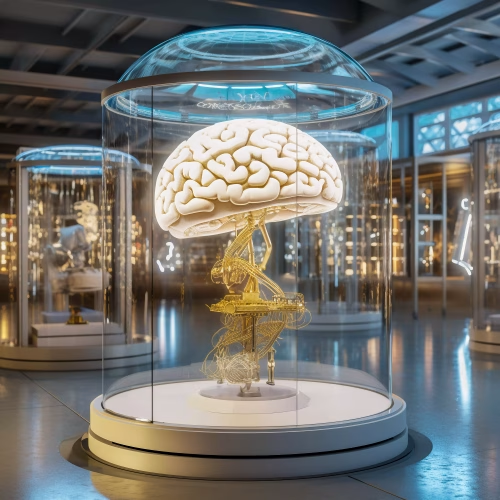
The Genesis of Neuroprosthetics: A Journey from Concept to Reality
The idea of interfacing with the nervous system to restore function is not new. Early pioneers in brain research laid the groundwork, but it's only with modern technological capabilities that these visions have truly materialized. The journey of neuroprosthetics began with simple electrical stimulators and has evolved into sophisticated systems capable of decoding complex neural signals. This evolution has been fueled by relentless scientific inquiry and significant research grants, pushing the boundaries of what was once considered science fiction.
Initial efforts focused on basic stimulation, such as pacemakers for the heart. However, the complexity of the brain presented a far greater challenge. The development of miniaturized, biocompatible neural implants was a critical turning point. These implants, often no larger than a grain of rice, can be placed directly into the brain or along peripheral nerves, establishing a direct line of communication between the nervous system and external devices. This direct interface is what sets modern neuroprosthetics apart, offering unparalleled precision and control.
Key Technologies Powering the Revolution
The rapid advancement in neuroprosthetics is a testament to interdisciplinary collaboration, bringing together experts in neuroscience, engineering, computer science, and material science. Several core technologies have been pivotal:
- Brain-Computer Interfaces (BCIs): At the heart of many advanced neuroprosthetics, BCIs translate brain activity into commands for external devices. This involves sophisticated algorithms that interpret electrical signals (EEG, ECoG, or single-unit recordings) and convert them into actionable outputs, allowing individuals to control cursors, robotic arms, or even communicate through thought.
- Advanced Materials and Biocompatibility: The success of long-term neural implants hinges on materials that are not only conductive but also biocompatible, meaning they don't provoke adverse reactions from the body. Innovations in polymers, carbon nanotubes, and flexible electronics are leading to implants that are safer, more durable, and less invasive.
- Microelectrode Arrays: These tiny arrays, often containing hundreds or thousands of electrodes, are crucial for recording and stimulating neural activity with high resolution. The precision offered by these arrays allows for detailed mapping of brain regions and targeted interventions, significantly enhancing the functionality of neuroprosthetics.
- Artificial Intelligence (AI) in Neuroscience: Perhaps the most transformative element, AI in neuroscience has revolutionized how we interpret and utilize neural data. Machine learning algorithms are essential for real-time data analysis, enabling devices to learn and adapt to individual brain patterns. This allows for more intuitive control, faster response times, and greater accuracy in controlling complex prosthetic systems. AI helps filter noise, identify patterns, and even predict user intent, making the interaction with neuroprosthetics feel more natural.
Transformative Applications: Restoring What Was Lost
The impact of neuroprosthetics is most profoundly felt in their ability to restore lost functions, offering unprecedented independence and quality of life. The applications span a wide spectrum of medical conditions:
- Restoring Senses:
- Cochlear Implants: One of the most successful forms of neuroprosthetics, these devices bypass damaged parts of the ear to directly stimulate the auditory nerve, restoring hearing for hundreds of thousands worldwide.
- Retinal Implants: For individuals with certain forms of blindness, retinal implants can partially restore vision by stimulating the remaining healthy retinal cells, allowing for perception of light and shapes.
- Restoring Movement and Mobility: For those with paralysis due to spinal cord injury or neurological diseases, thought-controlled robotic arms and exoskeletons are changing lives. These advanced neuroprosthetics translate brain signals into precise movements, allowing individuals to grasp objects, feed themselves, and regain a significant degree of autonomy. The integration of AI in neuroscience is particularly critical here, enabling fluid and natural movements.
- Treating Neurological Disorders: Deep Brain Stimulation (DBS) is a well-established neuroprosthetic technique used to treat symptoms of Parkinson's disease, essential tremor, and severe obsessive-compulsive disorder. By delivering targeted electrical impulses to specific brain regions, DBS can significantly alleviate symptoms, highlighting the therapeutic potential of neural implants beyond mere restoration. Future developments are exploring similar approaches for depression and other complex disorders.
- Cognitive Enhancement and Communication: While still in early stages and raising ethical considerations, research is exploring the potential of neuroprosthetics for cognitive enhancement, such as improving memory or focus. More immediately, BCI-enabled communication devices are allowing individuals with locked-in syndrome to communicate through thought, providing a voice to those who were previously unable to express themselves.
The Symbiotic Relationship: Biotechnology, Research, and Neurotech
The field of neuroprosthetics is a prime example of how different scientific disciplines converge to create something truly revolutionary. Biotechnology provides the fundamental understanding of biological systems and the tools to manipulate them at a cellular and molecular level, crucial for designing biocompatible materials and understanding neural pathways. Continuous brain research is vital, as a deeper understanding of neural codes and brain plasticity directly translates into more effective and nuanced neuroprosthetic designs. This research often relies on substantial research grants and access to state-of-the-art lab equipment, from advanced microscopes to high-throughput sequencing machines.
The emergence of neurotech as a distinct industry underscores the commercial and societal importance of these advancements. This burgeoning sector encompasses everything from diagnostic tools to therapeutic devices and consumer-grade brain-sensing technologies. The rapid pace of innovation in neurotech promises a future where human capabilities are augmented and restored in ways previously unimaginable.
Challenges and the Horizon of Innovation
Despite the remarkable progress, the development of neuroprosthetics faces significant challenges. Long-term stability and reliability of neural implants remain a hurdle, as the body's immune response can degrade performance over time. Powering implanted devices wirelessly and efficiently is another engineering feat being actively pursued. Ethical considerations surrounding privacy, autonomy, and equitable access to these transformative technologies are also paramount and require careful societal deliberation.
Looking ahead, the future of neuroprosthetics is incredibly promising. We can anticipate more seamless integration with the human body, potentially leading to fully implantable, wireless systems that require minimal maintenance. Personalized neuroprosthetics, tailored to an individual's unique neural architecture and needs, will become more common. The synergy between AI in neuroscience and advanced materials will continue to drive innovation, leading to devices that are not only functional but also intuitive and adaptive.
Empowering the Next Generation of Neuro-Innovators with Deep Science
For those inspired by these monumental advancements and eager to contribute to the future of neuroscience and neuroprosthetics, foundational knowledge and practical skills are essential. Programs like those offered by Deep Science Workshops and Deep Science Implementation are designed to equip aspiring scientists and engineers with the expertise needed to thrive in this dynamic field. From understanding fundamental brain principles to mastering computational synapses and advanced data analysis techniques, these workshops bridge the gap between theoretical knowledge and real-world application.
Engaging with such specialized training is crucial for anyone looking to make a tangible impact in neurotech, whether through cutting-edge brain research, developing the next generation of neural implants, or leveraging AI in neuroscience to unlock new therapeutic possibilities. The journey into the depths of the brain and its technological augmentation is just beginning, and with the right education, you can be at the forefront of this exciting revolution.
Join Now: Explore Neuroscience & Neuroprosthetics with Deep Science